There are moments in life when God moves so quietly that you don’t realize He’s rearranging your world until you’re standing in a sunrise you didn’t expect. Today is one of those moments for me.
After years of writing, revising, doubting, rewriting, praying, and waiting…
My debut novel, When the Fog Lifts, is officially published and available on Barnes & Noble.
This story began as a whisper — a single image, a fragile spark — during a season where my own life felt wrapped in mist. Chronic illness, grief, shifts in identity, spiritual growth, motherhood, and the gentle tug of God calling me deeper… all of it shaped the pages of this book.
I wrote pieces of this novel in the in–between places:
• at 2 a.m. when pain kept me awake
• in the soft hush of morning prayer
• while waiting for test results or sitting in quiet hospital corners
• in the exhausted but holy spaces of motherhood
• and in those grace-filled moments where God reminded me that hope is always being restored
Writing became prayer.
Story became healing.
And healing slowly became a testimony.
When the Fog Lifts follows characters who wrestle with their own shadows — faith, grief, identity, forgiveness, longing, and the aching beauty of new beginnings. It’s a novel about what emerges on the other side of spiritual winter… and how God leads us into light even when the pathway is unclear.
This book holds pieces of my heart, my faith, my healing, and the promise that God never wastes our suffering. He transforms it.
To hold this finished book in my hands feels like God placing a long-awaited gift gently into my palms and saying,
“See? I was here the whole time.”
If you feel led to support my work or simply want to spend time with a story rooted in hope, healing, and quiet redemption, you can order the book here:
Thank you for walking this journey with me — through the fog, into the light, and into this new chapter I never thought I’d reach. Your prayers, your encouragement, and your love have carried me more than you know.
“In returning and rest you shall be saved; in quietness and trust shall be your strength.” — Isaiah 30:15
As autumn fades into winter, the air grows still and the earth begins to sleep. Nature slows its breath — and God, in His wisdom, invites us to do the same. This quieter season is not a sign of weakness or weariness but a sacred invitation to rest.
So many of us carry the weight of exhaustion: physical, emotional, spiritual. Yet the Lord whispers gently in our fatigue, “Come to Me, all you who labor and are burdened, and I will give you rest” (Matthew 11:28). Rest is not a reward for productivity; it is a reflection of God’s order. Even creation itself keeps Sabbath.
Rest as a Holy Discipline
The Catechism of the Catholic Church calls rest a part of our human dignity:
“Human life has a rhythm of work and rest. The institution of the Lord’s Day helps everyone enjoy adequate rest and leisure to cultivate their familial, cultural, social, and religious lives.” (CCC 2184)
When we rest intentionally — through prayer, quiet meals, and gentle care for our bodies — we are not stepping away from holiness. We are stepping deeper into it. Rest is not escape; it is communion. It reminds us that our bodies are temples of the Holy Spirit, deserving of tender stewardship.
Wholiopathic Healing in Harmony with Faith
God placed the healing herbs of creation at our fingertips, not as substitutes for faith but as companions to it. They soothe what the soul cannot always express, and they remind us that creation itself participates in God’s mercy.
Here are three simple herbal comforts you can prepare this month — each blending prayer, warmth, and nourishment for the weary body and soul.
1. Holy Basil (Tulsi) Tea — For Peace and Calm
“Peace I leave with you; My peace I give to you.” — John 14:27
Holy basil has long been revered for restoring balance in times of stress. Brew 1 tsp of dried leaves in hot water for 5–7 minutes. Sip slowly, breathing gratitude with each inhale.
As you drink, pray:
“Lord, sanctify my thoughts. Let Your peace settle where anxiety has taken root.”
2. Chamomile Honey Steep — For Gentle Rest
Chamomile’s soft floral notes calm both body and spirit. Steep 1 tbsp of chamomile flowers in 8 oz of hot water for 10 minutes. Add honey and a few drops of lemon.
As you rest your hands around the cup, whisper:
“God of comfort, thank You for this moment of stillness. Teach me to rest in You.”
(Psalm 4:8 — “In peace I will lie down and sleep, for You alone, Lord, make me dwell in safety.”)
3. Elderberry Syrup — For Strength and Stewardship
Elderberries remind us that healing often comes from small, humble things.
Simmer 1 cup dried elderberries, 3 cups water, 1 cinnamon stick, 3 cloves, and a slice of ginger for 45 minutes. Strain and sweeten with 1 cup honey once cooled.
Take 1 tsp daily as a blessing over your immune system.
Pray as you prepare it:
“Lord, bless the work of my hands and the temple of my body.
Help me steward my health with love, not fear.”
Living in God’s Rhythms
When we align our lives with the seasons, we begin to see how all of creation worships. The bare trees teach surrender. The frost invites patience. Even the silence of winter carries grace.
Let this be a month where healing is not hurried — where you give your body what it needs, and your soul permission to simply be. Remember, stillness is not stagnation. It is the sacred soil where renewal begins.
Closing Prayer
Creator of all life,
Thank You for the gift of rest and the healing You’ve sown in creation.
Teach me to honor my body as Your dwelling place,
to seek peace in simplicity, and to trust that stillness is holy.
“Be still before the Lord and wait patiently for Him.” — Psalm 37:7
November has a quiet kind of holiness about it. After the joyful celebration of All Saints and the tender remembrance of All Souls, the Church invites us into a slower rhythm — a gentle descent into stillness before the brightness of Advent.
Nature teaches the same lesson. The earth exhales after harvest, the days grow shorter, and even the air seems to ask for gentleness. This is the time to pull close to God, to gather the scattered pieces of our hearts, and to make space for what is to come.
The Sacred Pause Before the New Year
In the liturgical calendar, Advent marks the beginning of a new Church year. But before that renewal begins, we’re offered a pause — a season to reflect, to simplify, to listen.
The Catechism of the Catholic Church reminds us that “God tirelessly calls each person to that mysterious encounter known as prayer” (CCC 2567). This sacred pause is that invitation — a reminder that peace doesn’t come from emptying our minds, but from filling our hearts with Christ’s presence.
When we learn to rest in that presence, even the silence feels full. It becomes the still place where hope begins to take root.
A Wholiopathic Approach to Waiting
Waiting is not idleness — it’s holy attentiveness. Just as we tend the soil before planting, our souls also need preparation.
Spiritually, we clear away clutter — resentment, noise, busyness — to make space for grace.
Physically, we embrace simplicity: slower meals, more sleep, deep breaths of cool air.
Emotionally, we allow ourselves to be small and honest with God, trusting that He meets us in our fatigue and longing.
“In returning and rest you shall be saved; in quietness and trust shall be your strength.” — Isaiah 30:15
A Simple Practice: The Cedar and Frankincense Simmer Pot
This simple act can become a sensory prayer — filling your home with peace and your heart with intention.
You’ll Need:
A few sprigs of cedar (or pine needles) — for purification and endurance.
1 tsp frankincense resin (or a few drops of essential oil) — for prayer and adoration.
Optional: slices of lemon or orange peel — for joy and light.
To Prepare:
Fill a small pot or slow cooker with water.
Add your ingredients and let them simmer gently.
As the steam rises, pray:“Lord, as this fragrance fills the air, let my home and my heart be filled with Your peace.Purify my thoughts, quiet my fears, and prepare me to welcome You anew.”
Let the aroma remind you that peace is not the absence of movement, but the presence of God.
Reflection: Preparing for the Light
Before the candles of Advent are lit, we tend the wick of our souls. Ask yourself:
What must I lay down so Christ may dwell more fully in me?
How can I honor silence and create room for the sacred?
Where is God asking me to wait — not in fear, but in trust?
Write these in your journal or prayer notebook. Return to them throughout November, and notice how God begins to answer in quiet ways.
Closing Prayer
Lord Jesus,
Teach me to find peace in Your timing.
Quiet the noise around me and the restlessness within me.
Help me prepare my heart with stillness, my home with simplicity,
and my soul with hope.
As I wait for Your coming, let my waiting become worship.
All Saints’ Day, celebrated on November 1st, is one of the Church’s oldest and most profound feasts. It honors all the saints — both known and unknown — who have gone before us and now share in God’s glory.
Historical Background
The feast likely began in the 4th century in the Eastern Church as a day to commemorate martyrs — Christians who gave their lives for their faith.
By the 7th century, Pope Boniface IV dedicated the Pantheon in Rome to Mary and all the martyrs, establishing the practice of celebrating all saints collectively.
Pope Gregory III (8th century) officially fixed November 1st as the feast in the Western Church, later confirmed by Pope Gregory IV in the 9th century.
Over time, the celebration grew to include all saints, not only martyrs, emphasizing the universal call to holiness.
The Meaning Today
All Saints’ Day reminds us that:
Every life matters: Holiness is not only for canonized saints; it’s the goal for all Christians.
We are part of the communion of saints: Those in heaven intercede for us, and we are united across time and space in God’s love.
Our ordinary lives can become extraordinary: Acts of love, patience, and faithfulness can be offered to God and become eternal.
“Therefore, since we are surrounded by so great a cloud of witnesses, let us also lay aside every weight, and sin which clings so closely, and let us run with endurance the race that is set before us.” (Hebrews 12:1)
For Families and Converts
If you or your children are new to Catholicism, All Saints’ Day can feel unfamiliar. Here’s how to introduce it with joy and simplicity:
Story Time: Read short biographies of saints at breakfast or dinner. Focus on virtues like courage, kindness, and faith.
Crafts and Decorations: Make a “saint altar” with candles, small statues, or drawings of your favorite saints.
Prayer Together: Light a candle and offer prayers for the intercession of saints who inspire you.
Acts of Love: Make a small family act of service — bake for a neighbor, donate food, or help someone in need.
Even small daily actions help children (and adults!) understand that holiness is attainable in everyday life.
A Tea or Essential Oil Blend to Honor All Saints
Saints’ Harmony Herbal Tea:
1 tsp dried hibiscus (joy & celebration-rich red color like the fire of love)
1 tsp dried peppermint (clarity & refreshment)
1 tsp dried calendula petals (healing & holiness)
Optional: a touch of honey for sweetness and a small pinch of cinnamon for warmth
Steep in hot water for 5–7 minutes, sip slowly, and reflect on the virtues of the saints.
Essential Oil Blend: (for diffusing or inhalation)
2 drops frankincense (sacred presence)
2 drops lavender (peace)
1 drop sweet orange (joy & celebration)
Blend in a diffuser or a carrier oil for personal anointing.
Healthy, Family-Friendly Meal
“Harvest Saints Dinner” — simple, nourishing, and symbolic:
Optional: sparkling water with fresh herbs for a celebratory drink
This meal honors the harvest season, celebrates creation, and encourages mindful gratitude — connecting body, mind, and spirit.
Celebrating Holiness in Everyday Life
Light a candle in honor of a favorite saint or a loved one who has passed.
Share stories about saints’ courage, generosity, and love.
Pray for the intercession of saints who inspire you in your daily life.
Incorporate a family activity like baking, tea time, or crafts “in honor of the saints.”
All Saints’ Day is more than history — it’s a living invitation to join the great cloud of witnesses, to live faithfully, and to recognize the holiness God calls forth in each of us.
Halloween can feel tricky for Catholics. While it has fun and cultural aspects, there are also influences that don’t align with our faith. But the Church encourages us to approach it thoughtfully, with discernment, creativity, and joy in God.
Ways to Celebrate Safely and Faithfully
Dress as Saints or Virtuous Figures: Inspire children and adults alike with costumes that honor heroes of faith — St. Francis, St. Joan of Arc, St. Cecilia, or even biblical characters. It turns a fun tradition into an opportunity for teaching about holiness.
Host a “Saints Party”: Share stories, crafts, and activities that teach about the lives of saints. You can have a “Saint Costume Parade,” make saint trading cards, or read short saint biographies aloud.
Pray Together: Begin the evening with a short family prayer, the Rosary, or a Hail Mary for protection and gratitude. You could also light candles in memory of saints and loved ones.
Acts of Kindness: Trick-or-treat for charity or donate candy to a local cause. Turn the celebration into service, showing your children that generosity and love are part of joy.
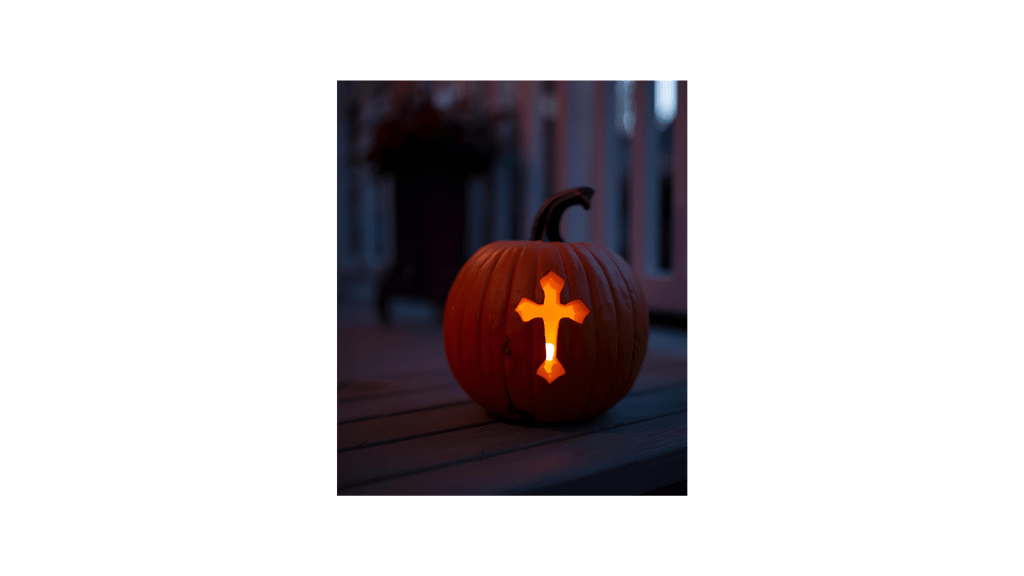
Decorate Creatively: Focus on autumn themes — pumpkins, gourds, leaves, and candles — rather than dark or occult imagery. Even small touches, like painting saint symbols or placing little saint figurines on your porch, make the space sacred.
A Fun, Faith-Filled Dinner Idea
Halloween night doesn’t have to be all candy! Try a themed meal that’s simple, fun, and rooted in faith:
Hot apple cider or herbal tea served with gratitude for the season
This meal celebrates the harvest, the beauty of God’s creation, and the joy of saints while keeping things family-friendly and wholesome.
For Converts and Families New to a Catholic Halloween
If you or your children are new to this approach, it can feel confusing or overwhelming. Here’s some gentle guidance:
Start Small: You don’t have to transform Halloween overnight. Choose one or two faith-centered traditions and build from there.
Communicate: Explain why some activities are avoided and why others are chosen. Children respond well to simple, honest explanations rooted in love.
Create New Memories: Introduce saint stories, crafts, or themed snacks as a way to reframe the holiday. Over time, these traditions can become cherished family rituals.
Celebrate Light Over Darkness: Focus on joy, gratitude, and the example of the saints. This is the heart of Catholic celebration: seeing God’s goodness even in ordinary moments.
Things to Avoid
Engaging in or glorifying occult practices, divination, or anything tied to the dark arts.
Costumes or decorations that promote fear, harm, or violence as entertainment.
Excessive indulgence or glorifying fear instead of light, virtue, and joy.
Reflection
All Saints’ Day, celebrated on November 1st, offers a beautiful alternative and complement to Halloween. It reminds us that holiness is possible, that ordinary lives can become extraordinary, and that God calls us all to sainthood. Watch for the next post to give more details!
Use this season to lift your eyes to heaven. Let your family and your heart dwell on light, virtue, and the communion of saints rather than fear or darkness. Even simple prayers, stories, or small acts of love can honor God and His saints.
Life isn’t always easy. Challenges, setbacks, and unexpected struggles arrive for all of us. But one of the most powerful truths I’ve learned — both through faith and holistic health — is this: how we respond to life shapes the life we live.
Our thoughts influence our emotions. Our attitudes influence our energy and our decisions. And our actions, even small ones, ripple outward into the world and back into our own hearts.
Thought Life: Negative thoughts can quietly erode our peace and physical health. Anxiety, resentment, and fear create tension in the body and mind. But Scripture reminds us:
“Finally, brothers and sisters, whatever is true, whatever is honorable, whatever is just, whatever is pure, whatever is lovely, whatever is commendable — if there is any excellence, if there is anything worthy of praise — think about these things.” (Philippians 4:8)
Intentionally lifting our minds to gratitude, trust, and hope opens channels for joy and clarity.
Attitude: A heart that seeks God, even in struggle, creates resilience. Attitude isn’t pretending everything is fine — it’s choosing to focus on what is true, good, and beautiful, even when life is messy. As Proverbs 17:22 reminds us:
“A joyful heart is good medicine, but a crushed spirit dries up the bones.”
Actions: Every choice, no matter how small, can align with God’s love. A kind word, a gentle gesture, a prayer whispered in the midst of busyness — these are the seeds that grow into peace, healing, and grace. James 3:17 reminds us:
“But the wisdom from above is first pure, then peaceable, gentle, open to reason, full of mercy and good fruits, impartial and sincere.”
In Wholiopathic care, we see this clearly: the inner world affects the outer world. Our spiritual health, our mental health, and even our physical well-being are connected. What we think, what we believe, and how we respond — they all matter.
So today, take a moment to ask yourself:
What am I thinking?
What attitude am I carrying into this moment?
How can I respond with love, patience, or gentleness?
God gives us this incredible gift: choice. And each choice, rooted in Him, is a step toward wholeness — for ourselves and for the people around us.
Remember, it’s not about perfection. It’s about awareness, intention, and surrender. Even small shifts in thought, attitude, and action can transform your life and allow God’s love to flow more freely through you.
When I closed the chapter on my time as an herbalist, aromatherapist, and Wholiopathic counselor, I didn’t fully know where God would lead next. What I did know was that His prompting to step away came with a defiant inner struggle, and then peace — the kind that only comes when He is doing something new.
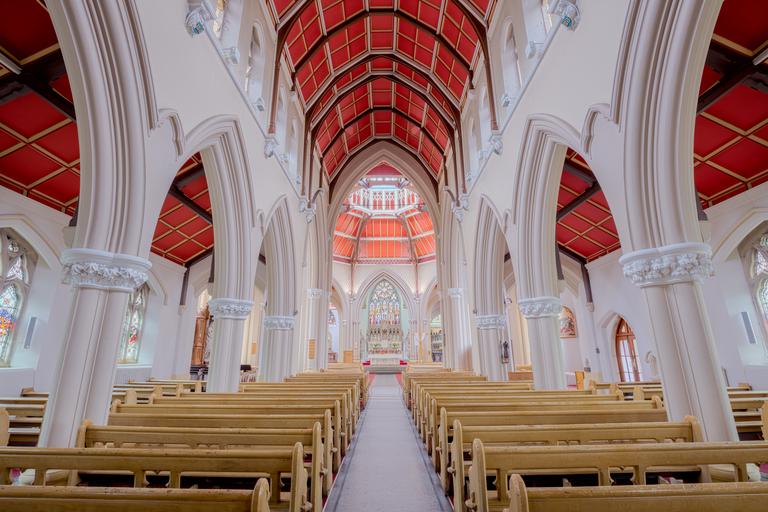
In time, I began to sense that He was leading me toward a deeper love for the beauty and rhythm of Catholic Liturgy — the heartbeat of our faith, where heaven meets earth and Christ is truly present. What began as quiet curiosity has grown into a wholehearted “yes” to study and serve in this sacred space.
So, what does a liturgist do?
A Catholic liturgist is someone who helps shape and guide the way the Church worships — not by changing what the Church teaches, but by helping the community live it more fully. Liturgy is not just about what we do at Mass, but how we pray, participate, and encounter God through the sacred seasons, feasts, music, art, and ritual.
A liturgist might:
Help plan the Masses and feast days so that they flow beautifully and reflect the liturgical season
Collaborate with clergy, musicians, lectors, and art and environment teams
Provide catechesis about why we worship the way we do
Help the faithful enter more deeply into the mysteries being celebrated
At its heart, liturgy is the prayer of the Church, uniting us to Christ’s own prayer to the Father. A liturgist’s role is to help make that encounter clearer, more reverent, and more deeply alive.
Why we need more liturgists — especially women
The Church needs people who see beauty, who listen for the Holy Spirit, and who understand how to help others pray with their whole selves. Women bring unique insight, intuition, and pastoral sensitivity to this work — seeing both the practical and the poetic, the human and the divine.
Having more female liturgists helps ensure the Church’s worship reflects the fullness of the Body of Christ. Just as I once sought to bring wholeness and balance to the body through herbal and holistic work, now I hope to help bring beauty and harmony to the Body of Christ in worship.
Why I’m following God on this new path
This calling to study liturgy came unexpectedly — but it feels like the natural unfolding of everything I’ve learned and lived so far. The care I once gave to blending herbs and oils now finds new expression in the care I give to blending prayers, readings, and symbols that lift the heart toward God.
In both paths, my purpose remains the same: to help others encounter the healing love of Christ.
Only now, I see that healing not just in the body, but in the sacred rhythm of prayer, beauty, and worship that restores the soul.
Just as God gave me a season of Wholiopathic ministry, He now invites me into a season of liturgical study and service — and I am learning to say yes with trust and gratitude.
A closing reflection
Sometimes God changes our calling not because the old one was wrong, but because it prepared us for what comes next.
Each path, each season, and each “yes” builds upon the last, forming a mosaic of grace that we can only fully see in hindsight.
I don’t know exactly where this liturgical path will lead, but I know Who is leading it — and that is enough.
I didn’t begin this journey because everything was easy — I began it because it wasn’t.
Like so many of us, I reached a point where the conventional answers weren’t enough. My body was weary, my spirit was heavy, and I found myself praying for a deeper kind of healing — not just a relief of symptoms, but a renewal of wholeness.
That prayer became a path.
The Search for True Healing
My health story, like many, is complex — chronic illness, fatigue, pain, and a body that didn’t always respond the way it “should.” For years, I tried to balance the medical and the spiritual, the physical and the emotional. I believed in medicine, but I also believed in the healing power of creation — the herbs, the oils, the rhythms God placed within nature itself.
What I discovered is that healing isn’t linear. It’s layered. It’s not a quick fix — it’s a conversation between the body and the soul.
That’s what led me to study herbalism and aromatherapy — not as trends or hobbies, but as tools to listen more deeply to the wisdom of the body and the gentleness of God’s design.
The Call to Wholeness
As I learned more about herbs and essential oils, something within me began to shift. Healing stopped being something I chased — it became something I participated in.
In every plant, I began to see the fingerprints of the Creator — the lavender that quiets anxiety, the frankincense that lifts the spirit, the peppermint that clears the mind. These weren’t coincidences; they were gifts of Providence.
I wanted to understand not only the science but also the sacred rhythm beneath it — how the physical, emotional, and spiritual dimensions of life are all interconnected. That’s what led me to pursue certification as a Wholiopathic Counselor — to integrate faith, holistic health, and gentle, individualized care.
Wholiopathic means whole-person healing:
Body — through nutrition, herbs, and natural support
Mind — through rest, rhythm, and renewal
Spirit — through prayer, sacrament, and surrender
It’s about cooperating with God’s design for restoration — not striving to control it.
Where Science and Soul Meet
I want to be clear about something that’s deeply important to me: healing does not mean rejecting medicine.
Wholeness isn’t found in extremes — it’s found in harmony. I don’t believe true healing means the absence of pharmaceuticals or medical intervention. Rather, it’s a place where both modern medicine and God’s natural resources exist together, each serving their purpose in love and wisdom.
As someone who relies on traditional medications every day to help my body function and manage complex conditions, I’ve learned to see them not as failures of faith, but as instruments of grace. I also use herbs, essential oils, and nutrition to support my body — not to replace what’s needed, but to cooperate with it.
Nobody should feel ashamed of that balance.
Healing is not “this or that.” It’s a sacred “and”.
Every body is different. Every journey is unique. God meets us where we are — in hospital rooms and herbal gardens, in pharmacies and in prayer.
Wholiopathic care honors that truth: that everything good and healing comes from the same divine Source.
The Grace in the Lemons
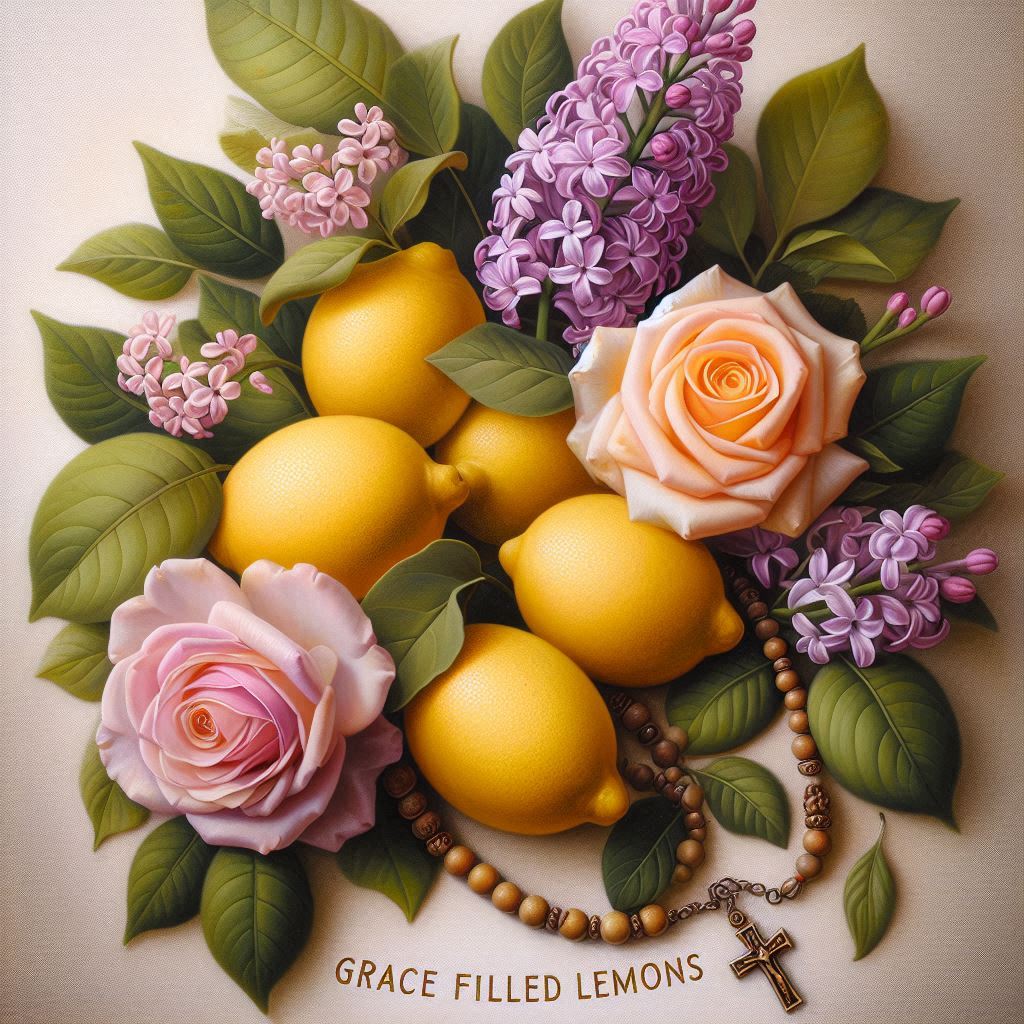
The name Grace Filled Lemons came from the heart of that journey. Life gave me lemons — chronic illness, exhaustion, uncertainty — but grace filled the cracks. God took what was sour and used it to heal me, inside and out.
Becoming a certified Aromatherapist, Herbalist, and Wholiopathic Counselor was never about collecting titles. It was about learning to serve — to bring comfort, peace, and God’s presence into the healing process of others who feel unseen or unheard.
It’s about offering the same compassion I once desperately needed.
A Ministry of Healing and Hope
Now, when I blend an herbal tea, prepare an anointing oil, or sit with someone as they share their story, I see it as sacred work. It’s prayer in motion. It’s ministry in the everyday.
I believe that every form of healing, when offered to God, becomes holy ground. The garden, the kitchen, the prayer chair — they’re all altars of grace.
So why did I become a certified Aromatherapist, Herbalist, and Wholiopathic Counselor?
Because healing — in all its forms — is how I meet God.
And helping others find that same meeting place is the greatest joy of all.
A Season of Renewal
At this time, I’m not seeing new Wholiopathic clients, but that doesn’t mean the ministry has fully stopped. From a young age, I have been drawn to the ways God provides for our healing—through creation, through care, and through the wisdom He places in our bodies and minds. My journey led me to study herbalism, aromatherapy, and Wholiopathic counseling, seeking ways to support the health and well-being of those around me, guided by faith, science, and the rhythms of God’s creation.
Those years of study and practice were full of learning, growth, and deep gratitude. I had the privilege of helping people explore holistic approaches to wellness, witness the subtle ways healing can unfold, and learn from the remarkable resilience of the human body and spirit. Every patient, client, and conversation shaped not just my professional skills, but my own understanding of God’s care and provision in daily life.
While I am deeply thankful for that chapter, God has been gently guiding me toward a new path: studying Liturgy in the Catholic Church. This shift does not mean that what I learned is lost—it is very much a part of who I am. Though I am no longer seeing clients in person, I still feel called to share the knowledge and skills I gained, offering guidance, inspiration, and practical tips freely. Just as the seasons change, so do our purposes and directions, and I trust that God can use my experiences in ways I may not even yet see.
Closing the gate on that path was not easy, but I am embracing this new vocation with gratitude and hope. I am eager to explore the beauty, depth, and sacred rhythm of liturgy, while continuing to honor the lessons, insights, and experiences from my time in herbal and holistic ministry—sharing them in ways that bring healing, encouragement, and joy to others.
Through continued writing, prayer, and shared reflection, I hope Grace Filled Lemons can be a place where you find gentle encouragement, holistic wisdom, and the reminder that healing is holy — even in the waiting.
A Wholiopathic Reflection on Touch, Scent, and the Sacramental Life
God formed us from the dust of the earth and breathed His Spirit into our bodies. From the beginning, He has communicated His love through creation — through what we can see, touch, taste, and smell. Our senses are not distractions from holiness; they are instruments of it.
In a world that numbs and overstimulates, rediscovering the sacred language of the senses can heal both body and soul. This is where Wholiopathic care meets the liturgical life: learning to encounter God not only in prayer, but in every breath, aroma, and act of daily living.
Scent — The Breath of Prayer
Scent is deeply tied to memory, emotion, and worship. In Scripture, incense symbolizes prayer rising to Heaven — “Let my prayer be counted as incense before You” (Psalm 141:2). The Church still sanctifies our sense of smell in the liturgy through incense, chrism, and sacred oils.
Wholiopathic reflection:
Fragrance can open the heart to prayer. Light a beeswax candle or diffuse frankincense, myrrh, or lavender as you pray the Divine Office or reflect on Scripture. Let scent remind you that holiness is meant to permeate every part of life — not confined to church walls, but breathed into the ordinary.
Try blending your own “holy hours” aroma:
Morning: Lemon, rosemary, and peppermint — for clarity and awakening.
Afternoon: Holy basil, cypress, and sweet orange — for renewal.
Evening: Lavender, frankincense, and cedarwood — for peace and surrender.
Touch — The Healing Sacrament of Presence
We experience so much of life through touch: a comforting hand, a blessing on the forehead, the cool water of Baptism, the anointing with oil. God sanctifies this sense again and again. Even Christ healed through touch — reaching toward the untouchable and calling them beloved.
Wholiopathic reflection:
Touch can restore peace to the nervous system and reawaken embodied trust. Practice anointing yourself or your loved ones with a simple oil — perhaps olive or almond — infused with herbs like calendula or chamomile. As you anoint, pray:
“May the Lord bless and heal what feels weary within me. May my hands become instruments of His peace.”
Your body becomes a vessel of sacramental care, reminding you that healing isn’t only spiritual — it is incarnational.
Taste — Savoring the Goodness of God
From the manna in the wilderness to the Eucharist, God continually nourishes His people through taste. “Taste and see that the Lord is good” (Psalm 34:8) is more than poetic — it’s a call to savor holiness.
Wholiopathic reflection:
Practice mindful eating as a form of prayer. Begin each meal with gratitude, chew slowly, and taste the flavors that God has given. Let herbal teas, honey, or simple foods remind you of His sweetness and provision.
A lovely ritual: create a Liturgical Tea each Sunday — infuse herbs that align with the season or feast. For example, rose and lemon balm for Easter joy, or cinnamon and clove for Advent longing. Each sip becomes a small sacrament of remembrance.
Sight — The Beauty That Heals
Beauty heals what logic cannot. The Church, in her wisdom, surrounds us with stained glass, candles, vestments, and icons — not as decoration, but as doorways to contemplation.
Wholiopathic reflection:
Surround your home with small signs of sacred beauty: a sprig of rosemary by a statue, an icon near your prayer chair, a candle lit during work. The eyes rest, and the soul remembers: I am in the presence of God.
Let the liturgical colors guide your space — green for growth, purple for repentance, white for purity and celebration. Beauty is not a luxury; it is medicine for the soul.
Hearing — The Word That Enters the Heart
Faith comes by hearing (Romans 10:17). The Psalms, hymns, and sacred silences of the Church remind us that hearing is not passive — it’s an act of reception.
Wholiopathic reflection:
Let your days be punctuated with sound that draws you into awareness: the bells of the Angelus, Gregorian chant, or even the rustle of trees in the wind. Let each sound call you to presence — to the reality that God is here, right now.
Anointed Wholeness
To live Wholiopathically is to live sacramentally — to let the material world become a meeting place between heaven and earth. The Liturgy of the Church teaches us this rhythm every day: incense rising, water poured, bread broken, hands laid in blessing.
As we rediscover our senses as instruments of grace, we begin to live liturgically — every breath, every touch, every aroma transformed into prayer. This is the anointed rhythm of wholeness: body, mind, and soul united in the One who made them.
In a world that glorifies hustle and constant motion, the ancient rhythm of the Liturgy of the Hours offers a sacred invitation: to slow down, to breathe, and to remember that every moment belongs to God.
For centuries, monks, nuns, and lay faithful have prayed the Hours — Matins, Lauds, Terce, Sext, None, Vespers, and Compline — sanctifying each portion of the day through psalms, Scripture, and silence. But this rhythm isn’t reserved for monasteries; it can also become a healing framework for our daily lives — especially when seen through a Wholiopathic lens.
Morning (Lauds) — Awakening the Body and Soul
As the sun rises, our bodies naturally shift from rest to alertness. Morning prayer calls us to awaken both physically and spiritually — to receive the light of Christ as our first nourishment of the day.
Wholiopathic companion practice:
Drink warm lemon water or an herbal infusion (like nettle + lemon balm) to awaken the body gently.
Step outside to feel the sunlight on your face; offer a short prayer of thanksgiving for the new day.
Pray: “Lord, open my lips, and my mouth will proclaim Your praise.”
This sets the tone for alignment — body refreshed, mind focused, soul attuned to gratitude.
Midmorning (Terce) — Centering and Breath
By midmorning, energy can scatter as tasks and distractions multiply. Terce invites the Holy Spirit into the midst of our work. It’s a moment to recalibrate — to check in with how we’re feeling physically, mentally, and spiritually.
Wholiopathic companion practice:
Pause for a few deep, mindful breaths.
Diffuse essential oils like rosemary for clarity or sweet orange for joy.
Offer a one-minute prayer: “Come, Holy Spirit, renew the face of my heart.”
This is holistic healing in real time — using the body’s breath and God’s breath (Spirit) to restore harmony.
Midday (Sext) — Nourishment and Stillness
At noon, we are invited to rest in the heart of the day — to pause for sustenance and surrender. Our Wholiopathic care at this hour reminds us that food is prayer, and rest is sacred.
Wholiopathic companion practice:
Eat slowly, with intention. Offer gratitude for your meal.
Step away from screens; take a few minutes of silence.
Reflect: Where have I seen God’s presence so far today?
This is the healing of rhythm — knowing that we are not meant to push through, but to pause and be filled again.
Afternoon (None) — Releasing Tension and Offering Fatigue
By afternoon, energy dips and stress can creep in. The prayer of None sanctifies this weary space, reminding us that even fatigue is holy when offered to God.
Wholiopathic companion practice:
Stretch gently, or walk outside for fresh air.
Massage your temples with diluted lavender or frankincense oil.
Pray: “Jesus, I offer You my weariness. May it bear fruit in love.”
In Wholiopathic care, healing isn’t about avoiding weakness — it’s about finding wholeness through it.
Evening (Vespers) — Gratitude and Release
As the sun sets, Vespers draws us into thanksgiving. The body begins to unwind, and the soul prepares for rest. This is a time to let go — of control, worry, and self-reliance.
Wholiopathic companion practice:
Brew a calming tea with chamomile and holy basil.
Light a candle or use soft lighting to create a sacred space.
Journal or pray: “Lord, I thank You for the graces of this day. Help me to rest in You.”
The act of gratitude itself is medicine — lowering stress hormones, easing inflammation, and lifting the spirit.
Night (Compline) — Rest and Renewal
As darkness falls, we close the day in trust. Compline teaches us to surrender our worries and sleep in God’s peace.
Wholiopathic companion practice:
Diffuse cedarwood or lavender essential oil to calm the nervous system.
Pray the Examen or a simple act of contrition.
Lie down and say: “Into Your hands, Lord, I commend my spirit.”
True healing begins when we rest — not just our bodies, but our hearts in Christ.
A Life of Rhythm and Restoration
Incorporating the Liturgy of the Hours into Wholiopathic care invites us to live sacramentally — to recognize that every hour of the day offers a chance to commune with God through prayer, breath, nourishment, movement, and rest.
When we heal with God’s rhythm, we remember that time itself is holy — and that healing is not just recovery, but reunion with the One who holds all things together.
Wholiopathic Companions for Praying the Hours
If you’re new to the Liturgy of the Hours, don’t be intimidated — the Church’s prayer is meant for everyone. Whether you’re a busy parent, someone living with chronic illness, or simply seeking a more sacred rhythm to your day, there are beautiful tools to help you begin:
Word on Fire’s Liturgy of the Hours — a stunning single-volume edition with simple, clear layout and rich commentary. It’s a beautiful way to pray with the Church while immersing yourself in beauty and reverence. This is also available in monthly booklets.
iBreviary App — free and accessible anywhere, perfect for quiet prayer breaks throughout the day.
Divine Office App — includes audio versions of the Hours, ideal for praying along during morning walks or rest periods.
Begin simply — maybe just Morning Prayer (Lauds) and Night Prayer (Compline) — and let the rhythm grow naturally, like a heartbeat returning to wholeness.
Each prayer hour can become a moment of embodied healing: breath, intention, and stillness joining with the voice of the universal Church.

 My debut novel, When the Fog Lifts, is officially published and available on Barnes & Noble.


 Remember, it’s not about perfection. It’s about awareness, intention, and surrender. Even small shifts in thought, attitude, and action can transform your life and allow God’s love to flow more freely through you.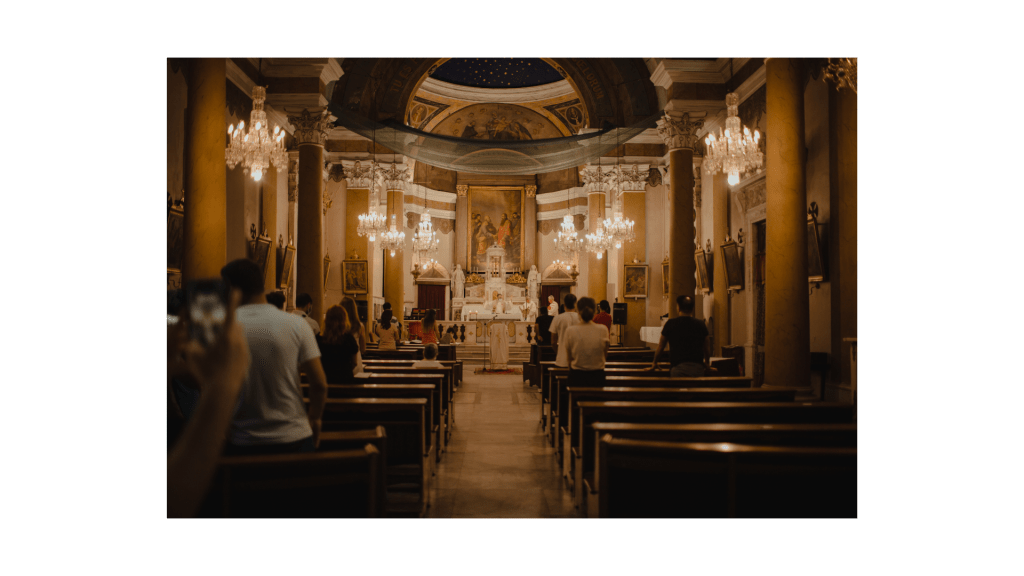


 Grace Filled Lemons