• There is a moment-
    quiet, almost imperceptible-
    when darkness breaks.

    Not all at once.
    Not with noise or spectacle.

    But with light.

    Easter is not simply a celebration.
    It is a revelation.

    A holy, earth-shaking, soul-awakening truth:

    Death is not the end.
    Darkness does not win.
    Love does not fail.

    He is risen.

    And everything, everything, has changed.

    The Silence Has Been Broken

    After the stillness of Holy Saturday…
    after the ache of Good Friday…
    after the long waiting…

    Something happens.

    The stone is rolled away.
    The tomb is empty.
    The impossible becomes reality.

    But notice this:

    It is not announced first with trumpets to crowds.

    It is revealed quietly-
    to a grieving woman in a garden.

    Mary Magdalene comes expecting death…
    and encounters Life Himself.

    She does not recognize Him at first.

    Until He speaks her name.

    And everything shifts.

    Reflection:
    How often does Christ stand before us-alive, present, working-
    and we do not recognize Him… until He calls us personally?

    Resurrection Is Personal

    Easter is not just something that happened.

    It is something that happens.

    Christ is still resurrecting things:

    • weary hearts
    • broken relationships
    • exhausted bodies
    • wounded identities
    • places we thought were too far gone

    This is the quiet miracle of Easter:

    What feels dead…
    is not beyond redemption.

    Grace Filled Truth:
    Resurrection rarely looks dramatic at first.

    Sometimes it looks like:

    • getting out of bed when it felt impossible
    • choosing hope when fear feels louder
    • whispering a prayer when words won’t come
    • taking one small step forward

    This is resurrection in motion.

    The Body Remembers What the Soul Needs

    As someone who walks the path of healing—body, mind, and spirit—you know this:

    We carry things.

    Grief settles into the body.
    Stress reshapes our nervous system.
    Fear lingers longer than we want it to.

    But Easter speaks into this too.

    Because resurrection is not just spiritual.
    It is embodied.

    Christ rose in a glorified body-not as a concept, but as a living, breathing reality.

    Wholiopathic Reflection:
    Your body was created for renewal.

    Even in chronic illness…
    even in fatigue…
    even in pain…

    There are still small resurrections available:

    • deeper rest
    • gentle nourishment
    • sunlight on your skin
    • breath that slows and steadies

    These are not insignificant.

    They are sacred.

    Living as a Resurrection People

    Easter is not meant to stay one day.

    It is meant to become a way of living.

    To be a resurrection people means:

    • We carry hope into hopeless places
    • We choose love when bitterness would be easier
    • We trust God is working-even when we cannot see it
    • We believe that no story is finished yet

    A Gentle Invitation:
    What in your life needs resurrection right now?

    Not fixing.
    Not forcing.

    But surrendering…
    so God can bring life in His way, in His time.

    A Simple Easter Practice

    Let this day be more than full schedules and beautiful meals (though those are gifts too).

    Create a small, sacred pause.

    Morning Light Ritual:

    • Step outside, if you can
    • Let the sunlight touch your face
    • Place your hand over your heart

    And pray:

    Jesus, You are alive.
    Bring life to what feels weary within me.
    Awaken hope where I have grown tired.
    Help me live today as someone who believes You are risen.

    Stay there for a moment.

    Breathe it in.

    A Closing Reflection

    The Resurrection is not rushed.

    It unfolds.

    Just like healing.
    Just like grace.
    Just like the slow, steady work God is doing in you.

    So if today you feel:

    • joyful → rejoice fully
    • weary → rest in Him
    • uncertain → trust gently

    There is room for all of it here.

    Because Easter is not dependent on how you feel.

    It is anchored in what is true.

    He is risen.
    He is alive.
    And He is still bringing life into the world-
    including into you.

    From My Grace Filled Lemons Heart to Yours,

    Laura
  • There is a hush that falls over Holy Week.
    A sacred slowing.

    The Church, in her wisdom, invites us not to rush to the joy of Resurrection-but to walk, step by step, with Christ through His final days.

    This is not just a remembrance.
    It is an invitation.

    An invitation to enter the story…
    to feel the tension, the love, the sorrow…
    and to allow it to transform us from the inside out.

    Let us walk gently through each day.

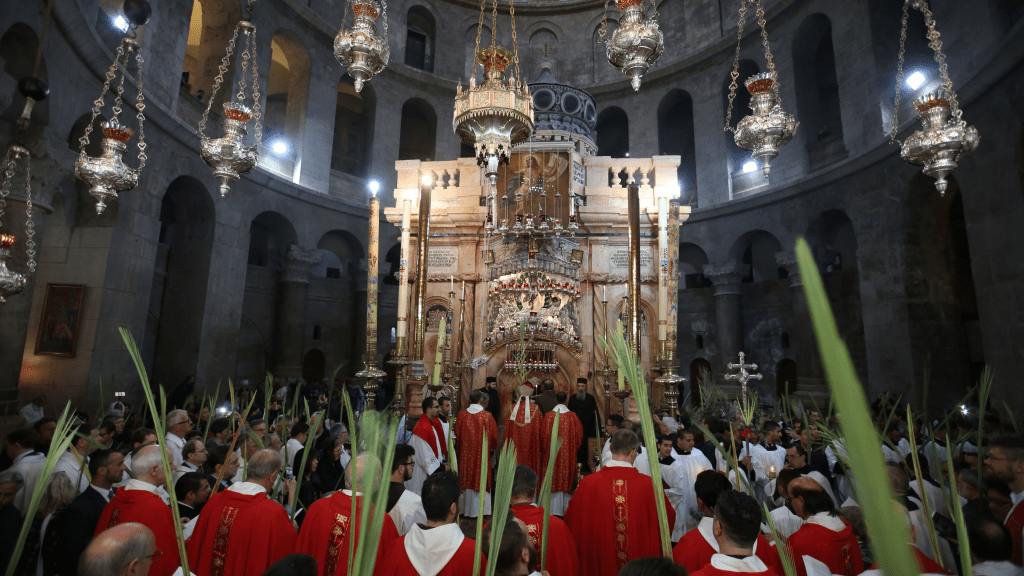
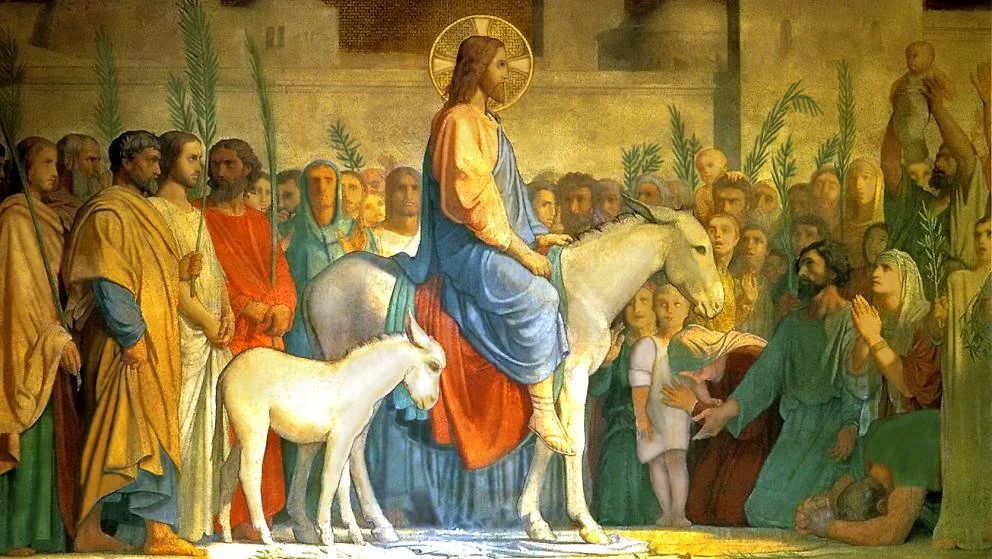
    Palm Sunday: The Beginning of the End

    Palm Sunday is both triumphant and heavy.

    We wave palms and cry “Hosanna!”-yet we know how quickly those cries will turn to “Crucify Him.”

    This day invites us to examine our own hearts:

    • Where do I praise God with my lips… but struggle to follow Him in suffering?
    • Where do I welcome Him in comfort, but resist Him in sacrifice?

    Simple Practice:
    Place a small branch, leaf, or greenery in your home this week. Let it remind you:
    “Lord, I welcome You-not just in joy, but in truth.”

    Holy Monday–Wednesday: The Hidden Days

    These quieter days are often overlooked-but they are deeply important.

    Jesus teaches.
    He confronts.
    He withdraws.
    He prepares.

    And so can we.

    These are the days to slow down and make space.

    Grace Filled Reflection:

    • Reduce noise (social media, TV, busyness)
    • Spend a few minutes each day in silence
    • Read even a small portion of the Passion accounts

    Wholiopathic Insight:
    Your nervous system needs stillness to process both physical and emotional stress.
    Even 5–10 minutes of quiet can begin to regulate your body and spirit.

    Simple Tea Companion:

    • Chamomile (calming)
    • Lemon balm (gentle uplifting)
    • A touch of honey

    Sip slowly. Let your body enter the stillness your soul is seeking.

    Holy Thursday: Love Poured Out

    Holy Thursday is intimacy.

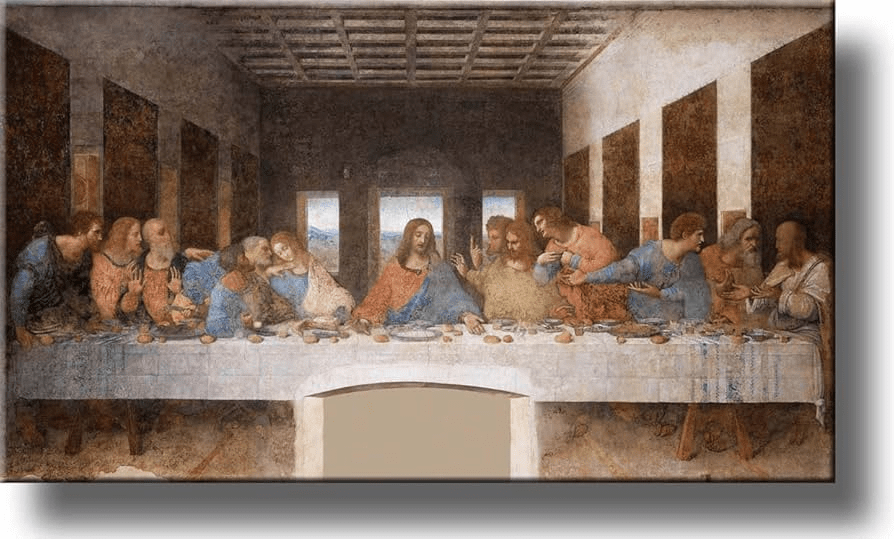
    Jesus gathers His disciples-not for a sermon, but for a meal.
    For presence.
    For love.

    He gives us the Eucharist.
    He washes their feet.
    He chooses humility over power.

    Reflection Questions:

    • Where is God asking me to love more deeply?
    • Where am I being invited to serve quietly?

    Simple Practice:
    Wash your hands slowly and intentionally before dinner.
    Pray:
    “Lord, teach me to serve as You serve.”

    Or consider a small act of hidden service-something no one else will notice.

    Good Friday: The Cross

    Good Friday is sacred sorrow.

    We do not rush past it.
    We do not soften it.

    We sit with the weight of the Cross.

    This is the day we remember:
    Love is not always comfortable.
    Love is not always easy.
    Love is often costly.

    And yet-it is always redemptive.

    Enter Gently:

    • Observe silence where you can
    • Reflect on Christ’s sacrifice
    • Sit quietly before a cross or crucifix

    A Prayer from the Heart:
    Jesus, I do not look away.
    Teach me to remain with You.
    In suffering. In love. In surrender.

    Holy Saturday: The Waiting

    Holy Saturday is often the most unfamiliar.

    It is the day of silence.
    Of uncertainty.
    Of waiting.

    The tomb is sealed.
    Hope feels hidden.

    And yet-this is where faith deepens.

    Because we learn to trust God…
    even when we cannot yet see what He is doing.

    Reflection:

    • Where in my life am I in a “Holy Saturday” season?
    • Can I trust that God is still working… even here?

    Gentle Practice:
    Keep the day simple. Quiet.
    Resist the urge to rush ahead.

    Let this be a day of rest, reflection, and surrender.

    Closing Reflection

    Holy Week is not meant to be rushed.

    It is meant to be lived.

    Not perfectly.
    Not rigidly.
    But intentionally.

    Even small moments-
    a quiet prayer, a simple cup of tea, a softened heart-
    become sacred when offered to God.

    Walk slowly this week, dear friend.

    Stay with Him.

    From My Grace Filled Lemons Heart to Yours,

    Laura
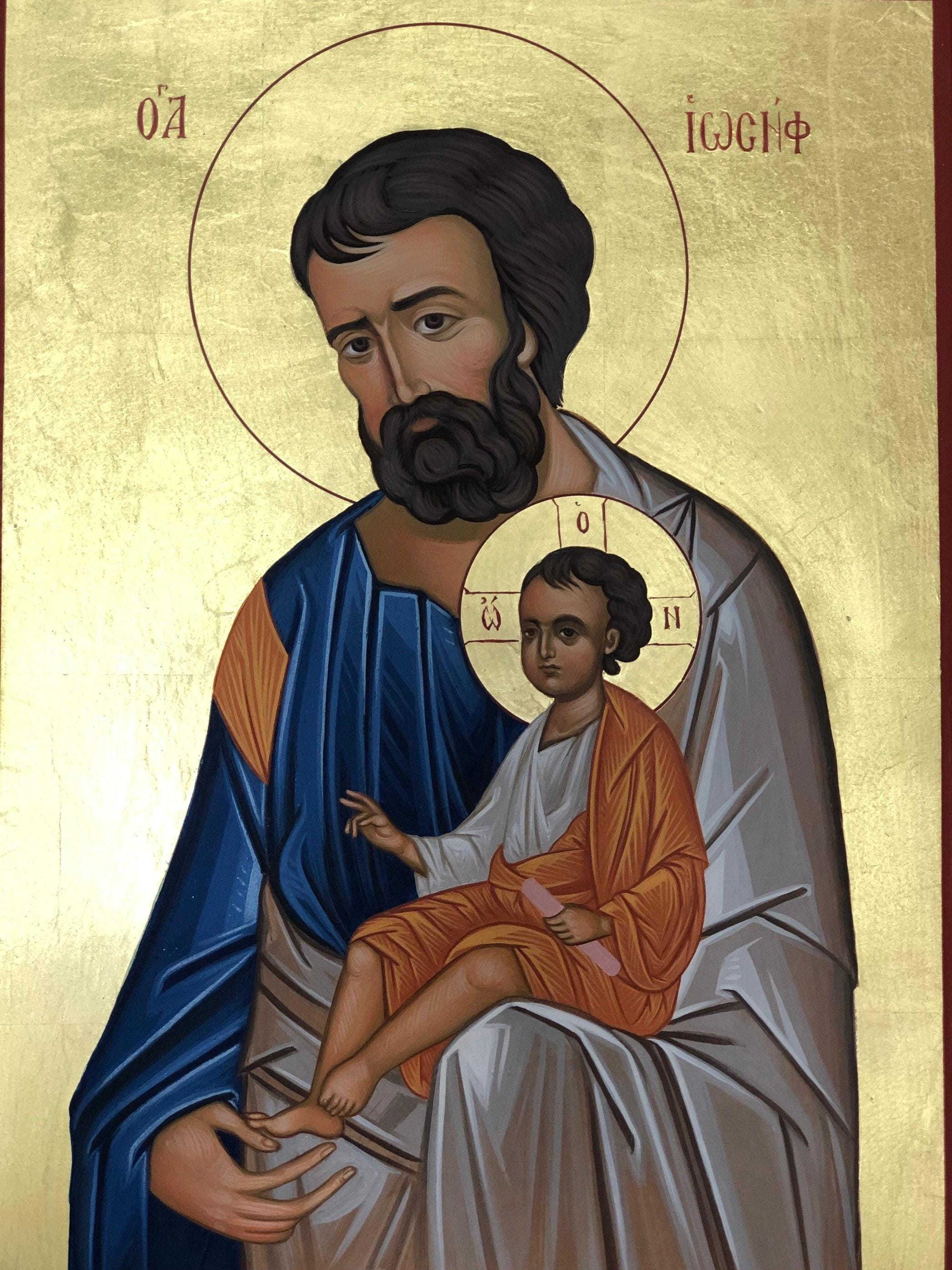
  • Guardian of the Redeemer, Terror of Demons, Silent Strength

    https://i.etsystatic.com/16581469/r/il/e7ade0/6502618279/il_fullxfull.6502618279_gtlw.jpg
    https://grace-filled-lemons.com/wp-content/uploads/2026/03/fe554-1071a8_ebc87831ba1242049fe5c031569d8266mv2.png

    Saint Joseph

    There are no recorded words of Joseph in Scripture.

    Not one.

    And yet he is entrusted with what no other man in history was given:

    The guardianship of the Son of God.
    The protection of the Mother of God.
    The safeguarding of the Incarnation itself.

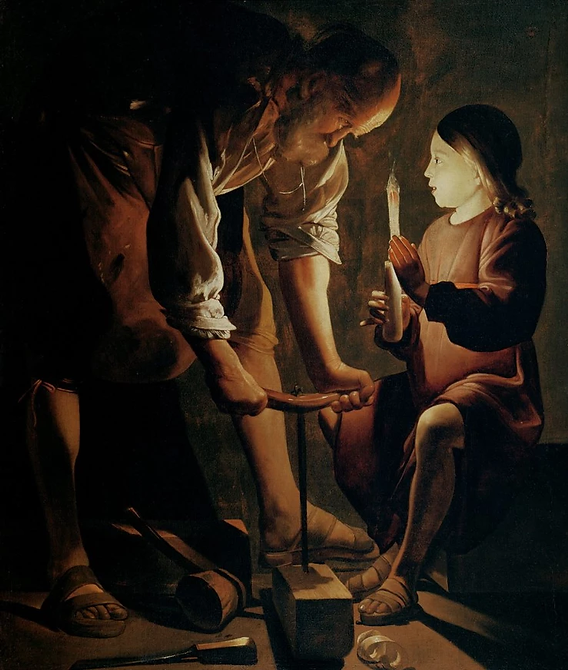
    Joseph was a descendant of King David, placing Jesus legally within the Davidic line. He was a tekton, a craftsman, likely working with stone as well as wood. His work was steady, physical, ordinary.

    When he discovered Mary was with child, he resolved to divorce her quietly, not from indifference, but from mercy. He refused public humiliation for her.

    Then came the first dream.

    Joseph is the man of dreams.

    An angel tells him not to fear taking Mary as his wife. He obeys.

    Another dream warns him to flee to Egypt to protect the Child from Herod’s massacre. He rises in the night and leaves immediately.

    Another dream tells him when it is safe to return.

    Joseph does not debate.
    He does not delay.
    He acts.

    His obedience is swift and protective.


    The Hidden Years

    For approximately thirty years, Joseph lived the hidden life of Nazareth.

    He taught Jesus how to pray the Psalms.
    How to hold tools.
    How to keep Sabbath.
    How to work with patience.

    The Son of God learned human labor at Joseph’s side.

    There is something astonishing here:

    God chose to need a father.

    Joseph’s masculinity is not loud. It is not domineering. It is not self-promoting.

    It is protective. Attentive. Responsible.

    He stands between danger and his family.

    He listens.

    He moves.

    He disappears from the Gospel narrative before Christ’s public ministry begins, suggesting he likely died before the Passion.

    For this reason, he is also invoked as the patron of a happy death.


    Titles of St. Joseph

    The Church has given Joseph many titles, including:

    • Guardian of the Redeemer
    • Patron of the Universal Church
    • Patron of Fathers
    • Patron of Workers
    • Protector of Families
    • Terror of Demons

    That last title is striking.

    Why would demons fear a carpenter?

    Because humility terrifies pride.

    Because obedient fathers undo the damage of chaos.

    Because hidden faithfulness builds what spectacle cannot.


    Devotion to St. Joseph

    March has long been dedicated to Joseph in the Church.

    Traditional customs include:

    • Baking St. Joseph bread
    • Creating St. Joseph altars
    • Praying the Litany of St. Joseph
    • Asking his intercession for employment, housing, and family protection

    His feast day falls in Lent, which feels fitting.

    Joseph’s entire life was Lenten in spirit — quiet sacrifice without applause.


    Reflection

    Where is God asking you to be quietly brave?

    Where are you called to protect what is sacred in your home?

    What dreams might God be speaking that require swift obedience?

    Joseph does not shout.

    He steadies.

    And perhaps that is the form of holiness March most needs.

    From My Grace Filled Lemons Heart to Yours,

    Laura
  • A Gentle Lenten Practice of Stewarding the Body

    Lent is often associated with fasting and stillness.

    But Lent is also about discipline.

    And discipline is not punishment.

    It is training.

    We are embodied souls. We pray with lips, kneel with knees, bow our heads, receive with hands.

    Our bodies matter.

    Saint Paul the Apostle writes, “Do you not know that your body is a temple of the Holy Spirit?”

    Caring for the body is not vanity.

    It is stewardship.

    And movement-gentle, consistent movement-can become prayer.


    Why Move During Lent?

    Movement:

    • Improves circulation
    • Supports mental clarity
    • Reduces stress
    • Builds strength and endurance
    • Reminds us we are alive and capable

    It can also train:

    • Perseverance
    • Self-mastery
    • Consistency

    You do not need a gym membership.

    You do not need perfect health.

    You need willingness.


    A Simple Lenten Movement Rule

    Think Benedictine rhythm for the body.

    Small.
    Daily.
    Repeatable.

    Commit to 10–20 minutes a day.

    Not extreme.

    Faithful.


    Chair Yoga for Any Energy Level

    Perfect for:

    • Beginners
    • Those recovering from illness
    • Older adults
    • Desk workers
    • Low-motivation days

    Sit tall in a sturdy chair with feet flat on the floor.

    1. Seated Neck Release

    Gently tilt ear toward shoulder.
    Hold 5 breaths each side.

    Release stored tension.


    2. Seated Cat-Cow

    Hands on knees.

    Inhale: Arch back slightly, lift chest.
    Exhale: Round shoulders forward.

    Repeat 8–10 times.

    Invite breath into the spine.


    3. Seated Forward Fold

    Feet flat.
    Hinge forward slowly, letting arms hang.

    Rest for 5–8 breaths.

    Let heaviness drain downward.


    4. Seated Twist

    Right hand to left knee.
    Left hand behind you.
    Twist gently.

    Hold 5 breaths. Switch sides.

    Twists aid digestion and detox pathways.


    5. Seated March

    Lift one knee at a time.

    Slow and controlled.
    30–60 seconds.

    Build gentle hip strength.


    Simple Strength at Home (Yes, with Beans)

    You do not need dumbbells.

    Grab two cans of beans or tomatoes.

    Consistency matters more than equipment.

    1. Bicep Curls

    Hold cans at sides.
    Curl upward slowly.
    12 reps × 2 sets.


    2. Shoulder Press

    Lift cans to shoulder height.
    Press upward.
    10 reps × 2 sets.


    3. Wall Push-Ups

    Stand facing a wall.
    Hands flat against it.
    Lower chest toward wall and press back.

    10–15 reps.


    4. Sit-to-Stand

    From a chair, stand fully, then sit slowly.

    10 repetitions.

    This strengthens legs and protects future mobility.


    A Lenten Walking Practice

    If weather allows, add:

    10–20 minutes of walking.

    Pray a decade of the Rosary.
    Or simply breathe and notice creation.

    Step. Breath. Step. Breath.

    Movement becomes meditation.


    Movement as Discipline, Not Punishment

    This is not about shrinking your body.

    It is not about earning food.

    It is not about aesthetics.

    It is about:

    • Circulation
    • Stewardship
    • Clarity
    • Offering your strength back to God

    Movement teaches us to show up even when we do not feel dramatic motivation.

    That is deeply Lenten.


    A Gentle Weekly Structure

    Monday–Friday:

    • 10 minutes chair yoga
    • 10 minutes strength or walking

    Saturday:

    • Longer walk or stretch session

    Sunday:

    • Rest and gratitude

    Small disciplines shape strong hearts.


    Closing Prayer

    Lord,

    Thank You for this body.
    For muscles that move.
    For breath that fills my lungs.

    Teach me to care for what You have given.
    Let my movement be gratitude.
    Let my discipline be joy.

    And as I strengthen my body,
    Strengthen my will and my love.

    Amen.

    From My Grace Filled Lemons Heart to Yours,

    Laura
  • Clearing the Pantry as a Spiritual Discipline

    Lent is a season of clearing.

    Clearing noise.
    Clearing excess.
    Clearing what dulls our hunger for God.

    But we rarely think about the kitchen as a place of spiritual formation.

    And yet, it is one of the most formative rooms in our home.

    It is where we:

    • Nourish or numb
    • Gather or rush
    • Bless or complain
    • Indulge or restrain

    If Lent is about retraining desire, then the pantry is a good place to begin.


    God Often Clears Before He Fills

    Throughout Scripture, God removes before He restores.

    The desert comes before the Promised Land.
    The tomb comes before the Resurrection.
    The fast comes before the feast.

    Clearing is not deprivation.

    It is preparation.

    When we simplify the kitchen, we simplify decisions.
    When we simplify decisions, we reduce impulsivity.
    When we reduce impulsivity, we regain peace.


    Step One: The Pantry Audit

    Set aside one hour.

    Take everything out.

    Ask three simple questions:

    1. Is this nourishing?
    2. Is this crowding out better choices?
    3. Is this here from habit or intention?

    Discard expired items.
    Donate unopened excess.
    Remove ultra-processed snacks that quietly fuel mindless eating.

    This is not about moralizing food.

    It is about clarity.


    Step Two: Return to Lenten Staples

    Lenten cooking has historically been simple, hearty, and sustaining.

    Stock your pantry with:

    • Lentils
    • Dried or canned beans
    • Brown rice or quinoa
    • Whole grain pasta
    • Garlic and onions
    • Olive oil
    • Sea salt
    • Crushed tomatoes
    • Broth
    • Frozen vegetables for your freezer
    • Nuts and seeds
    • Herbal teas

    When the foundation is simple, meals become steady instead of reactive.


    Step Three: Create a “Pause Shelf”

    Designate one visible shelf or basket for intentional foods:

    • Herbal teas
    • Mineral broth
    • Nuts
    • Dark chocolate (small portions)
    • Fresh fruit

    When hunger hits, you are choosing from nourishment — not chaos.

    This small visual cue supports holy restraint without white-knuckling willpower.


    Mineral Broth for Lenten Simplicity

    This is grounding, inexpensive, and deeply nourishing.

    Simple Mineral Broth

    Ingredients:

    • 2 carrots, chopped
    • 2 celery stalks, chopped
    • 1 onion, quartered
    • 3 cloves garlic
    • 1 cup chopped leafy greens (kale, parsley, or spinach)
    • 1 tablespoon apple cider vinegar
    • 8 cups water
    • 1 teaspoon sea salt

    Instructions:

    1. Combine all ingredients in a large pot.
    2. Bring to a gentle boil, then reduce to simmer.
    3. Simmer 45–60 minutes.
    4. Strain and store in the refrigerator for up to 5 days.

    Sip warm in the afternoon when cravings often surface.

    This nourishes without excess.


    The Spiritual Work of the Kitchen

    A simplified kitchen builds:

    • Attentiveness
    • Gratitude
    • Measured eating
    • Reduced waste
    • Financial stewardship

    When we remove constant snacking and overcomplication, meals regain their dignity.

    You begin to notice:

    The sweetness of carrots.
    The warmth of broth.
    The satisfaction of lentils.

    Restraint sharpens appreciation.


    Blessing Your Kitchen This Lent

    After resetting, stand quietly in your kitchen.

    Place your hand on the counter and pray:

    Lord,

    Bless this space.
    Let what is prepared here nourish body and soul.
    Remove excess from my heart as I remove it from these shelves.
    Teach me gratitude for simple food.
    Make this kitchen a place of peace and generosity.

    Amen.

    From My Grace Filled Lemons Heart to Yours,

    Laura

  • Learning to Hold Grief Without Hardening

    Lent makes space for sorrow.

    Not dramatic sorrow.
    Not performative sorrow.

    But the quiet kind we carry in our chest.

    The Church gives us a companion in this:
    Seven Sorrows of Mary

    Mary did not avoid suffering.

    She walked through it-fully awake.

    And she did not harden.


    Sorrow One: The Prophecy of Simeon

    Simeon tells Mary a sword will pierce her soul.

    She receives joy and warning in the same breath.

    How often do we receive blessings that also carry future ache?

    Mary teaches us that love always risks sorrow.


    Sorrow Two: The Flight into Egypt

    Herod the Great seeks to kill her Son.

    In the night, she flees.

    Displacement.
    Fear.
    Uncertainty.

    There are seasons when obedience uproots us.

    Mary does not argue. She gathers and goes.


    Sorrow Three: Losing Jesus in the Temple

    For three days, she searches.

    Every parent knows the panic of not knowing where a child is.

    Even without children, we know the feeling of losing something precious- clarity, certainty, peace.

    Mary sought Him.

    She did not pretend calm.


    Sorrow Four: Meeting Jesus on the Way to Calvary

    She sees Him beaten and burdened.

    There are moments when we cannot fix what someone we love is carrying.

    We can only stand near.

    Mary’s presence is wordless fidelity.


    Sorrow Five: Standing at the Cross

    Jesus Christ dies.

    She does not collapse.

    She remains.

    Grief does not make her flee.

    She stays rooted in love.


    Sorrow Six: Receiving His Body

    The Pietà moment.

    She holds what she once held as an infant.

    Love remembers.


    Sorrow Seven: Placing Him in the Tomb

    Silence.

    No resolution yet.

    Just waiting.

    Mary understands the space between promise and fulfillment.


    What Sorrow Does to the Body

    Grief is not abstract.

    It lodges in the body:

    • Tight chest
    • Shallow breath
    • Fatigue
    • Neck and shoulder tension
    • Digestive discomfort

    Unprocessed sorrow often becomes hardness.

    Mary shows us another way.

    She feels fully – and remains soft.


    A Wholiopathic Ritual for Softening Grief

    This is not dramatic.

    It is gentle.

    Warm Chest Compress

    • Steep chamomile tea strongly.
    • Soak a cloth in the warm tea.
    • Place over the heart for 10–15 minutes.
    • Breathe slowly.

    Let warmth soften what tension has guarded.


    Rose & Frankincense Anointing Oil

    Ingredients:

    • 2 tablespoons jojoba oil
    • 3 drops rose essential oil
    • 2 drops frankincense essential oil

    Apply lightly over the sternum while praying:

    “Mother, teach me how to hold sorrow without closing.”

    Rose comforts the heart.
    Frankincense steadies the spirit.


    Journaling Prompts

    • What sorrow have I minimized instead of acknowledged?
    • Where have I grown hard to protect myself?
    • What would it look like to remain present without fixing?
    • What promise am I still waiting to see fulfilled?

    Mary’s Strength

    Mary is not fragile.

    She is steady.

    Her sorrow does not make her brittle.

    It deepens her compassion.

    She becomes mother not only to Christ, but to all who suffer.

    At the Cross, Jesus gives her to us.

    Even if your relationship with your own mother is complicated or wounded, Mary’s motherhood is steady, not conditional.

    She does not withdraw when you struggle.

    She stands.


    Closing Prayer

    Mother of Sorrows,

    Teach me to stay.
    Teach me to feel without fear.
    Teach me to soften instead of harden.

    When sorrow presses against my chest,
    Remind me that love is still here.

    And when I must wait in silence,
    Help me trust that resurrection is coming.

    Amen.

    From My Grace Filled Lemons Heart to Yours,

    Laura

  • Bringing Benedictine Rhythm into Your Home This Lent

    Lent does not require you to leave your life.

    It does not ask you to escape your kitchen, your work, your children, your responsibilities.

    It asks you to order them.

    In a chaotic world, holiness often looks like rhythm.

    And few saints understood rhythm better than Saint Benedict of Nursia.


    Stability in an Age of Restlessness

    St. Benedict lived in the 5th and 6th centuries during the collapse of the Roman Empire. Society was unstable. Political systems were crumbling. Violence and uncertainty were common.

    Instead of trying to control the chaos, Benedict built communities anchored in prayer, work, and stability.

    His Rule became the foundation of Western monastic life.

    Its heartbeat was simple:

    Ora et Labora.
    Pray and Work.

    Not hustle and collapse.
    Not perform and escape.
    Not consume and numb.

    Pray. Work. Repeat.

    That rhythm rebuilt civilization.

    And it can steady a household, too.


    Your Home as a Domestic Monastery

    You do not need stone cloisters to live ordered holiness.

    You need intention.

    Imagine your home as a place of:

    • Regular prayer
    • Honest labor
    • Measured rest
    • Gentle discipline
    • Quiet hospitality

    A domestic monastery is not rigid.

    It is stable.


    Three Anchors for a Benedictine Lent

    Rather than overhauling your life, choose three daily anchors.

    1. Morning Offering (Ora)

    Before checking your phone, whisper:

    “Lord, I give You this day.”

    Light a candle if you can.
    Pray one Psalm slowly.
    Even 60 seconds sets the tone.

    Monks begin with prayer because it orders everything else.


    2. Faithful Work (Labora)

    Approach daily tasks — dishes, emails, teaching, caregiving — as sacred participation.

    Benedict believed work was not separate from holiness.

    Fold laundry attentively.
    Cook slowly.
    Answer emails with charity.

    This transforms ordinary labor into worship.


    3. Evening Examen

    Before bed, reflect:

    • Where did I notice God today?
    • Where did I resist Him?
    • What am I grateful for?

    No self-condemnation. Just awareness.

    Stability grows through daily reflection.


    The Grace of Routine

    We often resist routine because we crave novelty.

    But constant reinvention exhausts the soul.

    Benedictine stability says:

    Stay.
    Be faithful here.
    Let repetition form you.

    Even those with unpredictable schedules, demanding seasons, or health limitations can anchor the day in small rhythms.

    Stability is not perfection.

    It is returning.


    A Benedictine Kitchen Practice

    Monasteries have always cultivated herbs, bread, and simple nourishment.

    Food was never rushed. It was blessed, shared, and eaten with gratitude.

    Here is a simple rosemary bread inspired by monastic kitchens.


    Rosemary Olive Oil Bread

    Ingredients:

    • 3 cups all-purpose flour
    • 1 teaspoon sea salt
    • 1 tablespoon fresh rosemary, finely chopped
    • 2 ¼ teaspoons active dry yeast
    • 1 cup warm water
    • 2 tablespoons olive oil

    Instructions:

    1. In a bowl, combine warm water and yeast. Let sit 5 minutes until foamy.
    2. Stir in olive oil, flour, salt, and rosemary.
    3. Knead 8–10 minutes until smooth.
    4. Cover and let rise 1 hour.
    5. Shape into a round loaf and place on parchment.
    6. Bake at 375°F for 25–30 minutes until golden.

    Serve with olive oil and a simple blessing.

    Let bread-making become prayer.


    Benedictine Honey Tonic

    A gentle seasonal immune support inspired by traditional monastic herb use:

    • 1 cup raw honey
    • 1 tablespoon dried thyme
    • 1 tablespoon dried elderflower
    • Zest of one lemon

    Warm gently (do not boil), steep 20 minutes, strain, and store in a jar.

    Take 1 teaspoon daily.

    Sweetness with purpose.


    What the Domestic Monastery Builds

    When your home adopts even a whisper of Benedictine rhythm, it forms:

    • Stability in uncertainty
    • Peace in repetition
    • Reverence in routine
    • Gratitude in labor

    You do not need dramatic change.

    You need gentle anchors.

    In a restless culture, a stable home becomes countercultural witness.


    Closing Prayer

    Lord,

    Order my days.
    Bless my work.
    Sanctify my kitchen.
    Make my home a place of prayer and steady love.

    Teach me to stay,
    To build,
    To return.

    Amen.

    From My Grace Filled Lemons Heart to Yours,

    Laura
  • What We Gain When We Don’t Indulge Every Desire

    Lent is often described by what we give up.

    Sugar.
    Coffee.
    Social media.
    Snacking between meals.

    But Lent is not primarily about subtraction.

    It is about formation.

    It is about learning how to want rightly.


    Desire Is Not the Enemy

    God created desire.

    Hunger draws us to food.
    Loneliness draws us to relationship.
    Longing draws us to beauty.

    Desire itself is not sinful.

    But desire can become disordered when it demands immediate satisfaction, when it overrides wisdom, or when it becomes our master rather than our servant.

    Saint Augustine of Hippo wrote, “Our hearts are restless until they rest in You.”

    The problem is not that we desire.

    The problem is that we often desire the wrong things, in the wrong amounts, at the wrong time — and expect them to satisfy what only God can fill.

    Lent gently retrains the heart.


    The Culture of Immediate Gratification

    We live in a world that rarely says “wait.”

    Hungry? Order now.
    Lonely? Scroll.
    Bored? Stream something.
    Uncomfortable? Numb it.

    We are not taught how to sit with longing.

    But Scripture repeatedly invites restraint.

    Restraint is not repression.

    It is strength.

    When we practice holy restraint, we are saying:

    “I am not ruled by every impulse.”

    That is freedom.


    What Restraint Builds in Us

    When we do not indulge every craving, something surprising happens.

    We grow:

    • Patience
    • Endurance
    • Clarity
    • Discernment
    • Gratitude

    When we wait to eat, we taste more fully.

    When we pause before responding in frustration, we speak more wisely.

    When we delay a purchase, we often realize we did not need it.

    Restraint sharpens awareness.

    It teaches us the difference between need and impulse.


    A Lenten Practice: The Discipline of the Pause

    Instead of adding more complexity to Lent, try this:

    Before indulging a desire — pause.

    Not forever. Just long enough to ask:

    • Is this nourishing or numbing?
    • Am I responding from peace or discomfort?
    • What am I actually needing right now?

    This can apply to:

    • Food
    • Speech
    • Spending
    • Emotional reactions
    • Even good things taken in excess

    The pause is where formation happens.


    A Wholiopathic Companion Practice

    Because body and soul are intertwined, we can support restraint physically as well as spiritually.

    Bitter Greens Reset Salad

    Bitters help regulate digestion and reduce sugar cravings. They gently “wake up” the palate.

    Ingredients:

    • 2 cups arugula or dandelion greens
    • ½ cup thinly sliced fennel
    • ¼ cup toasted walnuts
    • 1 tablespoon olive oil
    • 1 tablespoon fresh lemon juice
    • Pinch sea salt

    Toss and serve before your main meal.

    The slight bitterness reminds us that not everything sweet is nourishing — and not everything bitter is harmful.


    Simple Digestive Bitters Tonic

    If you prefer an herbal support:

    • 1 teaspoon dried dandelion root
    • 1 teaspoon dried orange peel
    • 1 cup hot water

    Steep 10–15 minutes. Drink 15 minutes before meals.

    This supports digestion and reduces impulsive snacking.


    Restraint Is Not Harshness

    Holy restraint is not about punishing yourself.

    It is not about white-knuckling hunger.

    It is about learning that you can feel a desire without obeying it immediately.

    You can experience discomfort without escaping it.

    You can long without grasping.

    This is deeply countercultural.

    And deeply freeing.


    What We Gain

    When we stop indulging every impulse, we gain:

    • Space
    • Awareness
    • Self-mastery
    • Deeper gratitude
    • Clearer love

    Lent is not about shrinking your life.

    It is about strengthening your love.

    Restraint is not the loss of pleasure.

    It is the purification of it.


    Closing Prayer

    Lord,

    Teach me to pause before I grasp.
    Teach me to hunger for what truly satisfies.
    Train my desires so they rest in You.
    Make my restraint gentle, not rigid.
    And let my small sacrifices deepen my freedom.

    Amen.

    From My Grace Filled Lemons Heart to Yours,

    Laura
  • A Month of Martyrs, Mercy, and Hidden Fidelity

    March is not a quiet month in the Church.

    It is a procession of courage.

    From martyrs in the arena…
    To mystics in their homes…
    To reformers, founders, and hidden guardians…

    March teaches us that holiness takes many forms — bold, wounded, silent, sacrificial.

    Let us walk through them in order.


    March 3

    St. Katharine Drexel (1858–1955)

    https://gardnerlibrary.org/sites/default/files/entry/17a72.jpg
    https://upload.wikimedia.org/wikipedia/commons/thumb/0/0a/Saint_Cyprian_Church_%28Columbus%2C_Ohio%29_Sister_of_the_Blessed_Sacrament_and_Schoolboy.jpg/250px-Saint_Cyprian_Church_%28Columbus%2C_Ohio%29_Sister_of_the_Blessed_Sacrament_and_Schoolboy.jpg

    Saint Katharine Drexel

    Born into Philadelphia wealth, Katharine inherited millions — and gave nearly all of it away.

    She founded the Sisters of the Blessed Sacrament and established schools for Native American and African American communities at a time when such work was unpopular and even dangerous.

    Her sanctity was not sentimental. It was strategic, sacrificial, and steady.


    March 7

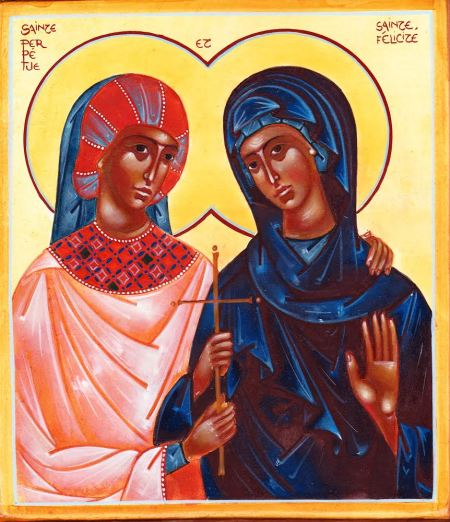
    Saints Perpetua and Felicitas (d. 203)

    https://www.axiawomen.org/sites/default/files/2020-06/Sts%20Perpetua%20and%20Felicity.jpg

    Saints Perpetua and Felicity

    Young mothers.

    Catechumens.

    Imprisoned in Carthage during Roman persecution.

    Perpetua was noble-born. Felicitas was enslaved. Their friendship in prison defied social order.

    Perpetua kept a prison diary — one of the earliest surviving Christian writings by a woman.

    They were condemned to die in the arena.

    Felicitas gave birth just days before martyrdom.

    Their courage was maternal, defiant, luminous.

    They remind us that holiness does not wait for convenience.


    March 8

    St. John of God (1495–1550)

    https://upload.wikimedia.org/wikipedia/commons/thumb/5/58/John_of_god_murillo.jpg/930px-John_of_god_murillo.jpg
    https://s3.us-west-2.amazonaws.com/files.catholicworldreport.com/2025/03/StJohnofGod_hd_db-678x381.jpg

    Saint John of God

    A soldier. A wanderer. A bookseller.

    After a dramatic conversion, John devoted his life to caring for the sick and mentally ill — people often abandoned and mistreated in his time.

    He founded what became the Brothers Hospitallers.

    He personally carried the sick through the streets to shelter.

    His holiness was gritty and practical.

    He is now the patron of hospitals and the sick.


    March 9

    St. Frances of Rome (1384–1440)

    https://www.monasteryicons.com/images/large/st-frances-cabrini-icon-412.jpg

    Saint Frances of Rome

    Wife. Mother. Mystic.

    Frances lived in Rome during political unrest and plague.

    Though married young, she cultivated deep contemplative prayer while managing a household.

    After her husband’s death, she founded a community of oblates.

    She reportedly saw her guardian angel.

    Frances reminds us that sanctity is possible in domestic life — in kitchens, sickrooms, and city streets.


    March 10

    The Forty Martyrs of Sebaste (d. 320)

    https://upload.wikimedia.org/wikipedia/commons/3/3b/FortyMartyrsofSebaste.JPG

    Forty Martyrs of Sebaste

    Forty Roman soldiers who refused to renounce Christ.

    They were sentenced to stand naked on a frozen lake overnight.

    One renounced the faith and left.

    A guard, moved by their courage, declared himself Christian and took his place — restoring the number to forty.

    Their story is about perseverance together.

    We are not meant to endure alone.


    March 12

    St. Gregory the Great (c. 540–604)

    https://s3.amazonaws.com/cdn.monasteryicons.com/images/popup/st-gregory-the-great-icon-706.jpg
    https://upload.wikimedia.org/wikipedia/commons/1/15/Graduale_Aboense_2.jpg

    Pope Gregory I

    A monk who became pope.

    He strengthened liturgical structure, missionary expansion, and Church governance.

    Gregorian chant bears his name.

    He wrote extensively on pastoral care.

    Gregory shows us that intellectual leadership can be holy service.


    March 17

    St. Patrick (c. 385–461)

    https://images.openai.com/static-rsc-3/AZv_DjtPi2HuxzQ6COjW1LJ9q8rz2BmOldN3V2SZmyCzvEIKazZGMUtZRE1MMbfAnywfW0uY2FyTTlyM9f6Gc9LCrSJSGdLp6NI-jykO8vk?purpose=fullsize&v=1
    https://images.openai.com/static-rsc-3/yj717bPy_yIXK6lFAhQT9T1ArkTluFShDIRhR8p9A8n3R7SmaNezNWsWnEO9SK8UtpeMcb6lZoxdiGjOLkMsTRYkKePxCmuaGZa9ExsSzA8?purpose=fullsize&v=1

    Saint Patrick

    Kidnapped. Enslaved. Escaped.

    Returned as missionary bishop to Ireland.

    Converted thousands.

    Forgave deeply.

    Patrick’s feast is not about green decorations.

    It is about resurrection after captivity.


    March 19

    St. Joseph

    https://www.monasteryicons.com/images/large/st-joseph-holy-cards-727HC100.jpg

    Saint Joseph

    Carpenter. Protector. Dream-listener.

    He models quiet obedience and fatherly courage.

    Look for a more in depth post about our beloved St Joseph on the 19th.


    March 21

    St. Benedict (480–547)

    https://images.openai.com/static-rsc-3/NzhfQxE7Hj0itbzH4qE0AiuIIDbkDq4cA0rCPpfwXLsDI_HqypAl0Zuu6f0T-Rxi-a7eb8ftR8o-SZ8P7nAbbQuIhr6r8QgJmk0O7cpK9ns?purpose=fullsize&v=1
    https://upload.wikimedia.org/wikipedia/commons/d/df/Statue_of_St._Benedict%2C_Monastery_of_Rawaseneng.jpg
    https://upload.wikimedia.org/wikipedia/commons/c/c9/MS._Hatton_48_fol._6v-7r.jpg

    Saint Benedict of Nursia

    Founder of Western monasticism.

    Author of the Rule of St. Benedict.

    His motto: Ora et Labora — Pray and Work.

    He built stability in chaotic times.


    March 24

    St. Gabriel the Archangel

    https://images.openai.com/static-rsc-3/s6p4nSUCNhefljKp81K2Mt7SKWVwjaoM7DCua7nhP_xXCsOgixsr3Y4OUz7qH45-a8cuFQB5umwxYWjOom_ZFCBbed88hFzN8WU93u3KJo0?purpose=fullsize&v=1
    https://www.eutouring.com/statues_in_paris_b16_DSC01755_lrg.jpg

    Gabriel

    Messenger of the Annunciation.

    Gabriel appears in Daniel and Luke.

    He carries news that changes history.

    His feast reminds us that God still speaks.


    March 25 & March 27

    The Annunciation & The Seven Sorrows of Mary

    https://images.openai.com/static-rsc-3/MvxJtDf0WBRkm46CBP9TKj7Uu35D6_OJSX3W6ZjT1a3v8kujLbfUuvJBIykx1zBqo7O3DDckC_j1EOBInEHsGw1XQl434qx_lpYkByBtIUI?purpose=fullsize&v=1
    https://images.openai.com/static-rsc-3/gqPwRaXut9OAFGDr5lgCE-CegYco65dFuxqCPCY28M8WPT643MEZJCqaD2Pth_ShT-BJL5vxL8vRvdbhr_n1J0KkGxiQeYYRB5upy0Cez5A?purpose=fullsize&v=1
    https://images.openai.com/static-rsc-3/s6p4nSUCNhefljKp81K2Mt7SKWVwjaoM7DCua7nhP_xXCsOgixsr3Y4OUz7qH45-a8cuFQB5umwxYWjOom_ZFCBbed88hFzN8WU93u3KJo0?purpose=fullsize&v=1

    Annunciation
    Seven Sorrows of Mary

    Mary’s fiat begins salvation history.

    Yet her yes carried sorrow:

    • Simeon’s prophecy
    • Flight into Egypt
    • Losing Jesus in the Temple
    • Meeting Him on the way to Calvary
    • Standing at the Cross
    • Receiving His body
    • Laying Him in the tomb

    March holds both annunciation and foreknowledge of suffering.


    March Is a School of Courage

    Martyrs.
    Mothers.
    Mystics.
    Missionaries.
    Monks.

    March does not offer one model of holiness.

    It offers many.

    And perhaps that is the grace of this month.

    There is room for your particular path.

    From My Grace Filled Lemons Heart to Yours,

    Laura

  • When most of us think of Lent, we think of giving something up.

    Sugar.
    Coffee.
    Meat on Fridays.
    Social media.

    But beneath the external fast is something quieter, and far more transformative.

    Lent is not merely about subtraction.
    It is about interior reordering.

    It is about learning how to be still without reaching for noise.


    The Desert Was Not Dramatic

    Before His public ministry, Christ entered the wilderness.

    Jesus Christ did not begin with miracles.
    He began with silence.

    The desert strips away distraction.
    It reveals what we cling to for comfort.
    It exposes our interior restlessness.

    Many of us discover during Lent that we are less uncomfortable without sugar than we are without distraction.

    Silence reveals hunger we did not know we had.


    The Fast from Constant Explanation

    One hidden Lenten discipline is fasting from self-justification.

    We live in an age that encourages constant explanation:

    • Clarify yourself.
    • Defend yourself.
    • Curate your image.
    • Respond immediately.

    But when Christ stood before Pilate, He did not scramble to prove Himself.

    Pontius Pilate questioned Him. Accused Him. Pressured Him.

    Christ stood in truth.

    Interior strength is not loud.

    Lent invites us to loosen our grip on the need to:

    • Win every argument
    • Correct every misunderstanding
    • Defend every choice

    Sometimes holiness looks like quiet trust.


    Silence Is Not Emptiness

    Silence is not absence.

    It is space.

    And most of us resist space.

    Space reveals:

    • Anxiety we medicate with noise
    • Loneliness we drown with scrolling
    • Fear we bury under productivity

    This is true whether you are a busy parent, a professional, retired, single, chronically ill, or fully energetic. Interior noise is universal.

    Lent levels us all.


    A Gentle Lenten Practice for Any State of Life

    Instead of focusing only on what to eliminate, consider adding a practice of interior quiet.

    1. The Five-Minute Desert

    Once a day:

    • Sit without music.
    • No phone in reach.
    • No multitasking.

    Just breathe.

    2. A Candle Prayer

    Light a beeswax candle in the evening.
    Pray one Psalm slowly.
    Sit in stillness afterward.

    3. The Explanation Fast

    For one week, practice:

    • Not over-explaining.
    • Not filling every silence.
    • Not defending every small preference.

    Let your “yes” be yes.


    Herbal Companion for Interior Quiet

    A simple calming tea:

    • 1 teaspoon chamomile
    • 1 teaspoon lemon balm
    • ½ teaspoon holy basil

    Steep in hot water for 10 minutes.

    This blend supports nervous system regulation and mental clarity without sedation.

    Even those in strong health can benefit from intentional slowing.


    Closing Reflection

    Lent is not about becoming smaller.

    It is about becoming clearer.

    Clear of noise.
    Clear of scrambling.
    Clear of false urgency.

    The hidden fast may be the one that bears the deepest fruit.

    And no one but God needs to see it.

    From My Grace Filled Lemons Heart to Yours,

    Laura

© 2025 Laura Smith. All rights reserved.
The content on Grace Filled Lemons is the intellectual property of the author and may not be reproduced without written permission.