When we hear the word saint, it’s easy to imagine someone who lived centuries ago, performed miracles, or possessed an unshakable faith that feels far beyond our reach.
But the Church reminds us of something beautiful.
Saints were ordinary people who said “yes” to God in extraordinary ways.
Some were scholars. Others were farmers, mothers, soldiers, priests, kings, servants, and children. Many struggled with fear, doubt, illness, grief, or past mistakes. They weren’t perfect. They were faithful.
Holiness isn’t reserved for a select few. It’s the calling of every baptized Christian.
It begins in the quiet places: • Choosing patience when you’re tired. • Offering forgiveness when it’s difficult. • Praying when you don’t feel like it. • Loving your family well. • Receiving the sacraments. • Trusting God one day at a time.
Most of us will never have our names in stained glass windows.
But every act of love offered to God becomes another step toward heaven.
The saints remind us that holiness is not about doing extraordinary things. It is about allowing God’s grace to transform ordinary moments into something holy.
So today, wherever you are, begin there.
Heaven is filled with ordinary people who simply kept saying yes.
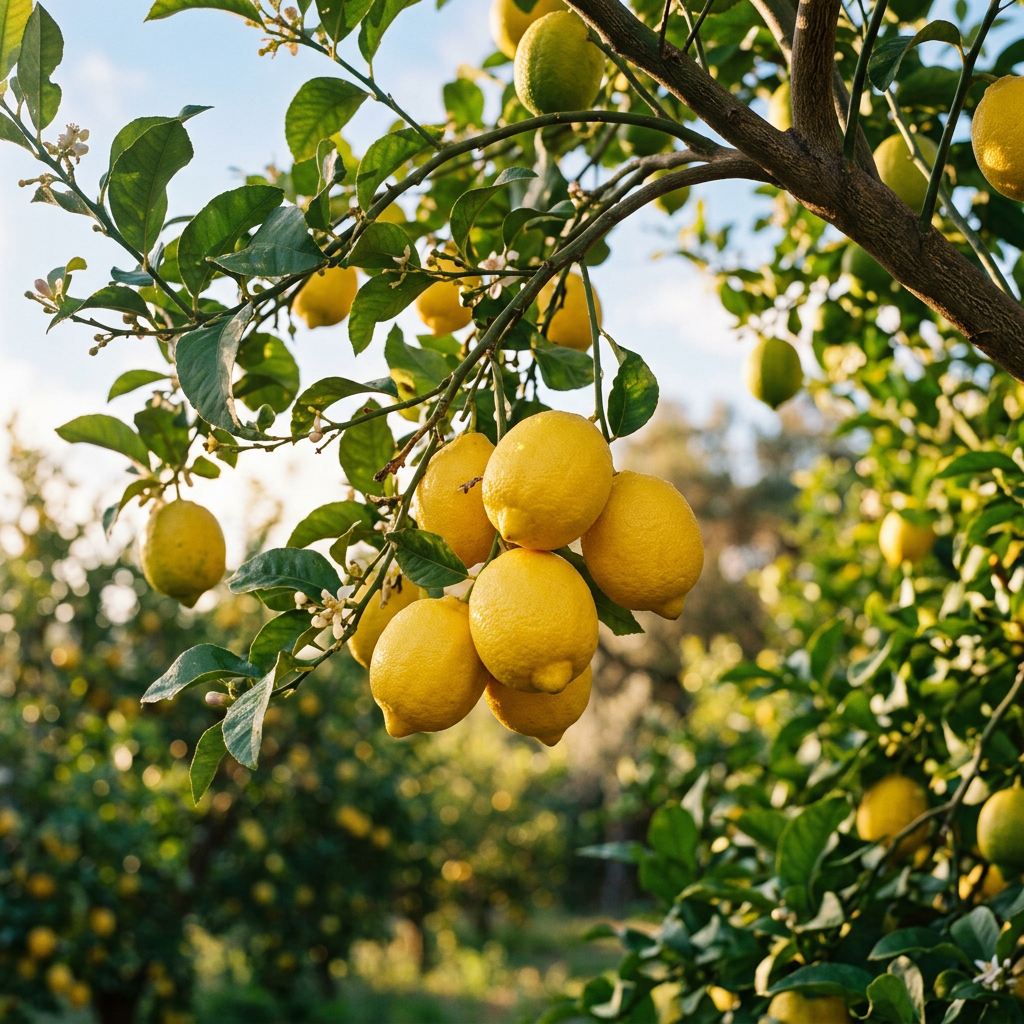
It’s been a little while since I’ve checked in here, and I wanted to let you know that Grace Filled Lemons has certainly not been forgotten.
Over the past couple of months, much of my creative energy has gone into building a new project called Holy Roots. It’s a space where I share about natural living, herbal wellness, nourishing food, and caring for the bodies God has entrusted to us. While my faith is woven throughout everything I do, Holy Roots focuses primarily on practical, everyday wellness.
Grace Filled Lemons, however, will always hold a very special place in my heart.
This page was born from my love for our beautiful Catholic faith. It’s where we can dive into the lives of the saints, celebrate feast days, reflect on Scripture and Church traditions, and encourage one another to grow closer to Christ. There are so many stories still waiting to be shared, and I’m excited to get back to creating them with you.
Sometimes God stretches our hearts to tend more than one garden. One nourishes the body, while the other nourishes the soul. Both are rooted in the same desire: to glorify God and to help others live with greater purpose, hope, and joy.
Thank you for your patience while I’ve been planting seeds in both places. I’m grateful you’re here, and I can’t wait to continue this journey together.
Stay tuned…there are saints to meet, feast days to celebrate, and plenty of grace still to discover.
Something we hope will come. Something we wait to experience.
But in the spiritual life, peace is not passive.
It is practiced.
It is protected. It is formed over time through small, faithful choices.
And one of the most important ways we cultivate it is this:
By becoming attentive to what we allow in.
What We Take In Shapes What We Carry
The mind and body are not closed systems.
They are constantly receiving.
Words. Images. Noise. Conversations.
All of it enters in some way.
And over time, it begins to shape what we carry within us.
In Proverbs 4:23, we are told:
“Guard your heart, for everything you do flows from it.”
This is not about fear.
It is about awareness.
Peace Requires Discernment
Not everything that is available to us is meant for us.
And not everything that is harmless on the surface is helpful to the soul.
Some things agitate. Some things scatter. Some things quietly drain.
Peace grows where there is discernment.
Where we begin to notice:
What leaves me feeling unsettled What leaves me feeling grounded
And we respond accordingly.
The Body Feels What the Mind Absorbs
It is not only spiritual.
It is physical.
What we take in affects the body.
Constant noise can lead to tension. Overstimulation can lead to fatigue. Heavy or chaotic input can leave a lingering sense of unease.
The body often carries what the mind has not processed.
This is why guarding what we receive matters.
Not out of restriction.
But out of care.
Creating a Climate of Peace
Peace is not found by accident.
It is cultivated.
Not through control, but through intention.
You might begin simply:
Choose moments of quiet instead of constant background noise. Limit what you take in before sleep. Be mindful of the tone of what you listen to and watch. Step away from what consistently leaves you unsettled.
These are small choices.
But they shape the inner environment.
Filling the Mind with What Is Good
Guarding is only part of the practice.
We are also invited to fill the mind with what is true and life giving.
In Philippians 4:8, we are told to dwell on what is true, honorable, just, pure, and worthy of praise.
This is not about ignoring reality.
It is about choosing what we return to.
Scripture. Prayer. Quiet reflection.
These begin to steady the mind.
A Gentle Boundary Practice
Consider one area where you feel overwhelmed by what you take in.
Choose one small boundary.
Not everything at once.
Just one.
Perhaps: Turning off background noise for part of the day Stepping away from certain conversations Creating a quiet moment before bed
Let it be simple.
Let it be sustainable.
Peace Is Built, Not Found
Many people wait for peace to arrive.
But peace grows where it is tended.
In what we allow. In what we release. In what we return to.
It is formed slowly.
Quietly.
Faithfully.
Reflection
Take a moment and consider:
• What am I taking in each day that may be affecting my peace • What leaves me feeling grounded and settled • What is one small shift I can make to guard my inner space
A Prayer for Peace
Lord, Help me to become more aware of what I am allowing into my mind and heart. Give me the wisdom to choose what leads to peace.
Teach me to guard what is within me, not out of fear, but out of love for You.
Let my thoughts be steady, my heart be calm, and my life reflect Your peace.
Amen.
Peace is not only something we receive.
It is something we learn to protect.
And in that quiet discipline… it begins to remain.
Something we earn after we have done enough. After we have finished everything. After we have proven ourselves productive.
But this is not how God designed it.
Rest is not a reward.
It is a command. A rhythm. An act of trust.
God Built Rest Into Creation
From the very beginning, rest was part of the design.
In Genesis 2:2, we are told that God rested on the seventh day.
Not because He needed to. But because we would.
This was not an afterthought.
It was intentional.
A pattern set into the structure of life itself.
To rest is to live in alignment with that pattern.
Rest Requires Trust
Slowing down can feel uncomfortable.
There is often a quiet fear beneath it.
If I stop, things will fall behind. If I rest, I am being lazy. If I slow down, I am not doing enough.
But rest asks a deeper question:
Do you trust God enough to stop?
In Psalm 46:10, we are told:
“Be still, and know that I am God.”
Stillness is not inactivity.
It is surrender.
The Body Speaks What the Soul Needs
The body is not separate from the spiritual life.
When we ignore the need for rest, the body often responds.
Fatigue. Tension. Restlessness. Burnout.
These are not failures.
They are signals.
Invitations to return to what is needed.
To pause. To breathe. To step out of constant output.
Listening to the body is not weakness.
It is wisdom.
A Different Kind of Productivity
The world values constant motion.
But the spiritual life values fruit.
And fruit does not come from striving.
It comes from remaining.
From abiding.
From allowing space for growth.
In John 15, we are reminded that fruit comes from staying connected to the vine.
Not from pushing harder.
Not from doing more.
But from staying rooted.
A Gentle Rhythm of Rest
Rest does not need to be complicated.
It does not require perfect conditions.
It can begin simply.
Sit in silence for a few minutes without reaching for your phone. Step outside and let your body settle in the open air. Close your eyes and take a slow breath. Lie down without the need to be asleep.
Let it be enough.
Let it be small.
Let it be consistent.
Reclaiming the Sabbath Heart
The Sabbath is not only about one day.
It is about a posture of the heart.
A willingness to stop striving. A readiness to receive instead of produce. A quiet recognition that you are not the one holding everything together.
This is where peace begins.
Reflection
Take a moment and consider:
• Where am I resisting rest • What do I fear would happen if I slowed down • What is one small way I can practice stillness today
A Prayer for Rest
Lord, Teach me to rest without guilt. Help me to trust that You are working even when I am still.
Quiet the part of me that feels the need to strive. Draw me into a deeper rhythm of peace.
Let my rest be an act of faith, and my stillness a place where I meet You.
Amen.
You were never meant to live in constant motion.
There is a holy kind of stillness waiting for you.
On one side, the desire to care for the body well. On the other, the fear of becoming too focused on it.
To eat well. To rest. To support the body naturally. And yet wonder… is this too much? Am I becoming overly concerned with health?
It is a valid question.
And one the Church has already answered with wisdom.
The Body Is Not Separate from the Soul
In 1 Corinthians 6:19, we are told:
“Do you not know that your body is a temple of the Holy Spirit within you?”
This is not symbolic language meant to be taken lightly.
A temple is a dwelling place. A place set apart. A place treated with care and reverence.
Your body is not an afterthought in your spiritual life. It is part of it.
God created it. Christ took on flesh. And through the Spirit, He remains present within you.
To care for the body is not vanity. It is stewardship.
The Difference Between Care and Control
The challenge is not whether we care for the body.
It is how.
There is a kind of care that is peaceful. Grounded. Ordered.
And there is a kind that becomes anxious. Rigid. Controlling.
One is rooted in trust. The other in fear.
The Church speaks of the virtue of temperance. Not restriction for its own sake, but right relationship.
Food is received, not feared. Rest is honored, not avoided. The body is supported, not controlled.
This is the balance.
Receiving Nourishment as Gift
Every meal is an opportunity to live this out.
Not by striving for perfection. But by receiving what is given.
Simple, nourishing food can become something more when approached with awareness.
Pause before eating. Offer gratitude. Notice the texture, the warmth, the care that went into it.
This is not about making meals complicated.
It is about allowing them to become intentional.
In a world that rushes and consumes without thought, even a quiet moment of gratitude becomes an act of reverence.
The Incarnation Changes Everything
At the heart of the Catholic faith is the mystery of the Incarnation.
God did not remain distant.
He entered the physical world.
In John 1:14, we read:
“And the Word became flesh and dwelt among us.”
This means that matter is not meaningless.
The physical world is not something to escape.
It is something that has been touched by God.
The body matters. Food matters. Rest matters.
Not because they save us, but because they are part of how we live in relationship with God.
A Gentle Rhythm of Care
Caring for the body does not need to be overwhelming.
It can be quiet. Steady. Sustainable.
Consider a simple rhythm:
Eat in a way that supports your energy, not just your cravings. Step outside and allow light and fresh air to reach you. Rest when your body asks, without guilt. Move gently, in ways that feel supportive rather than punishing.
These are not grand gestures.
They are small acts of faithfulness.
Guarding Against Subtle Idolatry
Even good things can become disordered.
Health can become a measure of worth. Food can become a source of anxiety. Routine can become rigid.
This is where we return to truth.
Your value does not come from how well you eat. Your worth is not determined by how healthy you are. Your body is not something to perfect.
It is something to care for.
And ultimately, to surrender.
Reflection
Take a quiet moment and consider:
• Where am I caring for my body in a way that brings peace • Where might I be holding too tightly to control • What would it look like to approach my health with trust instead of fear
A Prayer for Right Order
Lord, Teach me to care for what You have entrusted to me. Help me to nourish my body without becoming consumed by it.
Order my desires so that they lead me closer to You, not inward toward fear or control.
Let my care be gentle. Let my rhythms be steady. Let my heart remain rooted in You above all else.
Amen.
The goal is not perfect health.
The goal is right relationship.
And when that is in place, both body and soul begin to rest.
There is a quiet kind of seeing that we often lose.
Not because it disappears… but because we stop paying attention.
Life moves quickly. Days fill up. Our minds stay busy.
And somewhere in the middle of it all, we begin to miss what is right in front of us.
But God is not only found in the extraordinary.
He is found in the ordinary, too.
Learning to See Again
In 1 Kings 19, the prophet Elijah waits for God.
There is wind. There is an earthquake. There is fire.
But God is not in any of those.
He comes instead in a gentle whisper.
A quiet presence.
And it is only heard by the one who has learned to listen.
We often look for God in big moments. Clear answers. Strong feelings.
But more often than not, He is present in the smallest places.
The light coming through your window. The warmth of a cup in your hands. The stillness of early morning.
These are not distractions from your spiritual life.
They are part of it.
The Practice of Noticing
Noticing is not complicated.
It is simply the act of slowing down long enough to see what is already there.
To live this way, you do not need more time.
You need gentler attention.
Try beginning with this:
• Pause before moving from one task to the next • Take one slow breath and become aware of your surroundings • Let your body soften instead of rushing forward • Acknowledge one small thing you are grateful for
This is how awareness begins.
Not all at once. But in small, faithful moments.
A Simple Daily Rhythm
Instead of adding more to your day, allow this to be woven into what already exists.
In the morning, notice the light. At midday, notice your breath. In the evening, notice what stayed with you.
Let these moments become anchors.
Not tasks. Not obligations.
But gentle invitations.
Creating Space for Stillness
Our environments can either distract us or settle us.
Without needing to change everything, consider one small shift.
Choose a corner of your home. A chair, a window, a quiet space.
Let it become a place you return to.
Not for long periods. Not with expectation.
Just long enough to be still.
Even a few minutes is enough.
A Breath Prayer for the Day
When your thoughts feel scattered, return to something simple.
As you inhale: “Lord, You are here”
As you exhale: “I am with You”
Let it steady you.
Let it bring you back.
The Holiness of the Ordinary
There is a temptation to believe that meaningful moments must be obvious.
That they must feel profound.
But much of life is made up of small, quiet experiences.
And God does not overlook them.
He meets you in them.
The unnoticed moments. The in-between spaces. The ordinary parts of your day.
Nothing is wasted.
Nothing is too small.
Reflection
Gently consider:
• What have I been rushing past lately • Where might God be inviting me to slow down • What is one ordinary moment I can notice more fully today
A Prayer for Awareness
Lord, Slow me down enough to see what I have been missing. Quiet the noise within me so I can hear Your presence.
Help me to recognize You in the ordinary, and to trust that You are near, even in the smallest moments.
Teach me to live with open eyes and a steady heart.
The broken branches. The dried leaves. The quiet accumulation of what no longer has life in it.
Before a garden can flourish, it must first be cleared.
And the same is true for us.
The Beauty of Letting Go
There is a tenderness to this kind of work.
It is not harsh. It is not rushed.
It is intentional.
In John 15, we are reminded that God prunes what is living, not to harm it, but so that it may bear more fruit.
This can be difficult to accept.
Because letting go often feels like loss before it feels like freedom.
But not everything we are holding is meant to be carried into the next season.
What Might Need Releasing
Sometimes it is obvious. Sometimes it is quiet and hidden.
It may look like:
• habits that leave you depleted instead of nourished • expectations that were never rooted in truth • clutter in your home that weighs on your mind • striving that replaces peace • guilt that God has already asked you to surrender
You do not need to remove everything at once.
You only need to begin.
Nourishment for a Season of Reset
When we are releasing, the body often needs support.
Not restriction. Not pressure.
But steady, grounding nourishment.
Simple Spring Reset Soup
A warm, gentle meal that supports both body and spirit.
Ingredients: • 4 cups broth • 1 cup cooked chicken, shredded • 1 cup chopped carrots • 1 cup zucchini • 1/2 cup white rice or small pasta • 1 tablespoon olive oil • sea salt & your favorite herbs to taste
Directions: Bring broth to a gentle simmer. Add vegetables and cook until tender. Stir in chicken and rice. Finish with olive oil, herbs, and salt.
Why this supports you: • Warm and easy to digest • Restorative without being heavy • Simple enough for low energy days
Sometimes clearing space begins with feeding yourself well.
Gentle Morning Tonic
A soft way to begin the day with intention.
Ingredients: • 1 cup warm water • juice of 1/2 lemon • 1 teaspoon raw honey • pinch of sea salt
Directions: Stir and sip slowly in the morning.
This is not about pressure. It is about gentle support.
Creating a Space of Peace
As you begin to clear what no longer serves you, your environment can become a place of restoration.
One simple, beautiful way to do this is by lighting a 100 percent beeswax candle.
Beeswax candles offer more than a soft glow.
They: • burn cleanly without synthetic fragrance • release a light, natural honey scent • help reduce airborne particles • create a calm, grounded atmosphere
There is something deeply peaceful about a steady flame.
It slows the room. It softens the moment.
It invites stillness.
Let this be part of your rhythm.
Light a candle in the evening. Sit in the quiet. Offer the day back to God.
You Do Not Have to Carry It All
There is a quiet freedom in realizing this:
You were never meant to hold everything.
God does not ask you to be everything, fix everything, or carry everything.
He asks you to trust Him enough to release what is not yours.
And to make space for what is.
Reflection
Take a moment and consider:
• What feels heavy that I may be ready to release • What small space can I clear this week • What would it feel like to choose peace instead of pressure
A Prayer of Surrender
Lord, Gently show me what I am holding that is no longer needed. Give me the courage to release it, even when it feels unfamiliar to let go.
Create space in my heart for peace, and teach me to trust that You are working in the clearing.
Amen.
Spring is not only about what begins.
It is also about what is lovingly laid down.
And in that space, something new can finally take root.
There is a quiet kind of work that happens in spring.
Not the full bloom. Not the abundant harvest.
But the tending.
The small, unnoticed, easily overlooked care of what is just beginning.
A sprout does not demand attention. It does not announce its growth.
And yet… everything depends on what happens in this stage.
Do Not Despise the Small
In Zechariah 4:10, we are reminded:
“Do not despise these small beginnings…”
It is easy to long for visible growth. To want to feel stronger, better, healed, transformed.
But the truth is, most of what God does in us begins quietly.
In the small choices. In the daily rhythms. In the moments no one else sees.
Drinking water when you would rather not. Choosing rest when your body asks for it. Preparing a simple, nourishing meal. Stepping outside for light and air. Turning your heart toward God, even briefly.
These are not insignificant.
They are the tending.
Nourishing What Is Growing
Growth requires nourishment.
Not extremes. Not perfection. But steady, gentle support.
Instead of overwhelming yourself, come back to simple, healing foods that sustain your body while honoring your energy.
Simple Spring Nourishment Bowl
A grounding, easy meal to return to again and again.
Ingredients: • 1 cup cooked quinoa or white rice • 1/2–1 cup cooked vegetables (carrots, zucchini, green beans) • 3–4 oz ground chicken or turkey, gently seasoned • 1–2 tablespoons olive oil • pinch of sea salt and your favorite herbs
Directions: Layer everything in a bowl while warm. Drizzle with olive oil and add salt to taste.
Why this supports you: • Easy to digest • Balanced protein, fats, and carbohydrates • Gentle on the nervous system • Sustainable for everyday nourishment
Sometimes healing looks like returning to the same simple meal… and letting that be enough.
Directions: Combine in a glass spray bottle. Shake gently before each use.
Mist onto linens, pillows, or into the air in the evening.
Why this blend: • Lavender calms the nervous system • Ylang ylang softens tension and emotional overwhelm • Sweet orange lifts and brightens
Together, they create a sense of gentle restoration.
The Temptation to Rush Growth
We live in a world that celebrates visible results.
But growth, true growth, cannot be rushed.
A plant forced to grow too quickly becomes weak.
Roots need time.
So do you.
If you feel like you are moving slowly… if healing feels inconsistent… if your progress feels invisible…
You are not behind.
You are growing in the way that matters most.
Reflection
Take a quiet moment and ask:
• What small habit is God inviting me to tend right now? • Where am I expecting instant growth instead of steady care? • What would it look like to nourish myself gently this week?
A Prayer for Faithfulness
Lord, Teach me to be faithful in the small things. When I am tempted to rush, slow me down. When I feel discouraged, remind me that growth is happening beneath the surface.
Help me to tend what You are growing in me, with patience, with gentleness, and with trust.
Root me deeply, so that in time, I may bloom in the way You have intended.
Amen.
There is beauty in becoming.
And right now… you are in the sacred work of tending.