Sometimes Kingdom work is full of joy and visible growth— but often, it’s not.
Often, it looks like planting seeds in dry soil with no sign of breakthrough. It looks like praying for someone for years with no visible change. It looks like teaching the same lesson, offering the same grace, doing the same hard thing—again and again—without knowing if it’s making a difference.
It’s easy to wonder, Is this even working? Is this even worth it?
But the truth is: Kingdom seeds often grow in hidden places.
“I planted, Apollos watered, but God gave the growth.” — 1 Corinthians 3:6
This one verse holds the tension so many of us live in.
We plant. We water. We stay faithful.
But God gives the growth. Not always on our timeline. Not always in ways we can see.
We are called to faithfulness, not control over the outcome.
You may never see the full bloom of the seeds you’re planting. The kindness you showed. The word of encouragement you offered. The boundaries you set. The child you’re raising. The prayers you’ve whispered through tears.
You may never know how God used it. But He did. And He is.
Nothing sown in love is ever lost.
A Prayer for the Faithful Planters:
Lord, thank You for inviting me into this slow, sacred work. Help me to keep planting even when I’m tired. Help me to keep watering with faith, even when I can’t see the fruit. Remind me that You are the God of growth— And that nothing offered in love is wasted in Your Kingdom. Amen.
Journaling Prompts:
What seeds have I been planting that feel slow to grow?
Where am I longing to see fruit—and where do I need to trust God with the timing?
What helps me stay faithful even when I don’t see results?
Who in my life is quietly planting seeds that I want to affirm and thank?
Let this be your reminder: The harvest is His. The love is yours. The work is holy.
Lunch: Braised lamb or lentil loaf, rosemary potatoes, spelt bread, poached pears
Dinner: Herbal greens and fruit salad
Intention: Celebrate healing — write down what God has already restored in you
From my Grace Filled Lemons heart to yours,
Laura
*P.S. A gentle reminder: if your health or energy doesn’t allow for a full meal plan right now, please don’t feel bad about that. Healing and nourishment look different for everyone. Maybe just pick one recipe to try—or simply enjoy the inspiration. And if even that feels like too much this week, that’s okay too. Let grace carry you, not guilt. You’re doing the best you can, and that is more than enough.
There’s a holy kind of love that quietly shapes the world. It doesn’t always make headlines. It rarely feels glamorous. But it forms souls, softens hearts, and reflects the tenderness of God.
This is the love of mothers, fathers, caregivers, mentors, and spiritual parents—those who say yes to the long, slow work of nurturing life.
“We were gentle among you, like a nursing mother taking care of her own children.” — 1 Thessalonians 2:7
St. Paul didn’t use warrior language here. He used the language of motherhood. Of gentleness. Of care. And he wasn’t speaking only to parents—he was speaking to the Church.
Because all of us are called to nurture something. A child. A friend. A hurting soul. A growing faith. And in doing so, we reflect the God who mothers and fathers us with patience.
You don’t have to be a biological parent to live this calling.
Spiritual parenthood is for anyone who says: I’ll stay. I’ll care. I’ll keep showing up, even when it’s hard.
Whether you’re raising a family, mentoring a teen, caring for an aging parent, or simply offering your time to someone who needs it—you are building the Kingdom in ways that may never be fully seen, but will always be deeply felt.
A Prayer for the Caregivers and Nurturers:
Lord, thank You for entrusting me with the sacred work of nurturing others. Whether I am raising a child, walking alongside a friend, or simply loving someone well— Give me the grace to do it gently, patiently, and with Your heart. Fill me when I feel empty. Steady me when I feel unseen. And remind me that love like this echoes into eternity. Amen.
Journaling Prompts:
Who has spiritually mothered or fathered me—and how has it shaped my life?
Where am I currently being called to nurture others, even in quiet ways?
What makes me feel weary in that calling, and how can I let God refill me?
What would it look like to offer my love as a reflection of His?
The world needs more people willing to love with endurance. You are not “just” anything. You are a soul-shaper—and that is holy ground.
Everyone is talking, posting, reacting. We are constantly invited to weigh in, speak up, make a point. And yet, deep down, most of us aren’t longing to be talked at—we’re longing to be heard.
Real listening is rare. But in the Kingdom of God, it is sacred work.
“Let every person be quick to listen, slow to speak, slow to anger.” — James 1:19
Listening is not passive. It’s not just waiting your turn to speak. It’s a form of presence. A form of love.
When we truly listen to someone—without judgment, without distraction, without rushing to fix or respond—we mirror the heart of God.
Because God listens. To our half-formed prayers. To our sighs too deep for words. To the stories we tell and the ones we’re too afraid to say aloud.
He hears it all—and He stays.
You don’t have to have the right words. You just have to be present.
When you sit with someone in their pain or joy… When you ask how someone’s doing and truly wait for the answer… When you hold silence without trying to fill it…
You are building a space where the Kingdom can breathe.
A Prayer for Quiet Presence:
Lord, help me become a better listener. Quiet the noise in my own heart so I can make room for others. Teach me to love not just with words, but with attention. Let my listening become a doorway to healing— A place where someone feels seen, safe, and gently known. Amen.
Journaling Prompts:
Who in my life needs to be deeply listened to right now?
How can I create more space for silence and presence in my conversations?
When have I felt truly heard—and what did it do for my heart?
What distracts me from listening well, and how can I bring that to prayer?
You don’t have to say the perfect thing. Your listening may be the very healing someone is praying for.
Intention: Praise Christ who turns suffering into glory
From my Grace Filled Lemons heart to yours,
Laura
*P.S. A gentle reminder: if your health or energy doesn’t allow for a full meal plan right now, please don’t feel bad about that. Healing and nourishment look different for everyone. Maybe just pick one recipe to try—or simply enjoy the inspiration. And if even that feels like too much this week, that’s okay too. Let grace carry you, not guilt. You’re doing the best you can, and that is more than enough.
Lunch: Roast beef or lentil loaf, rosemary potatoes, buttered green beans
Dinner: Baked apples with cinnamon cream
Intention: Rest, rejoice, and thank God for the gift of His rhythm
From my Grace Filled Lemons heart to yours,
Laura
P.S. A gentle reminder: if your health or energy doesn’t allow for a full meal plan right now, please don’t feel bad about that. Healing and nourishment look different for everyone. Maybe just pick one recipe to try—or simply enjoy the inspiration. And if even that feels like too much this week, that’s okay too. Let grace carry you, not guilt. You’re doing the best you can, and that is more than enough.
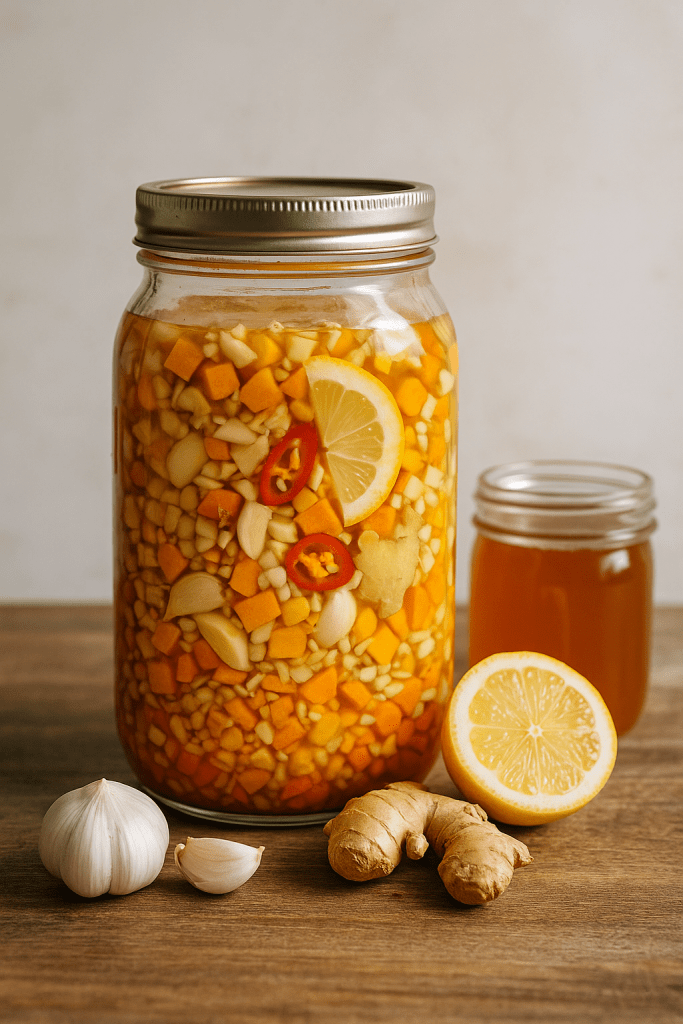
As the crispness of fall is soon to settle in, so is what I like to call “germ season”. Between school, travel, and holiday gatherings, and an increase in sugar consumption, our immune systems are suddenly asked to do a lot of heavy lifting. Preparing ahead is one of the best ways to meet this season with peace and strength — and one of my favorite traditions is brewing a big jar of fire cider.
But here’s a little twist that makes it extra special: I always finish my fire cider with a swirl of Liquid Gold.
What is Liquid Gold?
“Liquid Gold” is a golden elixir made from honey, turmeric, and warming spices. It transforms your fire cider into something smoother, richer, and even more healing. It balances the sharpness of vinegar with natural sweetness, while offering powerful anti-inflammatory and immune-supportive benefits.
Think of it as the crowning touch for your fire cider — nourishing, beautiful, and delicious.
Liquid Gold Recipe
Ingredients
1 cup raw local honey
2–3 Tbsp turmeric powder or 2–3 inches fresh turmeric, grated
1 Tbsp fresh ginger, grated (optional)
Zest of 1 lemon (optional)
Pinch of black pepper (to activate turmeric’s benefits)
Tiny pinch of cayenne (optional, for extra fire)
Instructions
Gently warm honey in a double boiler (low heat — do not boil).
Stir in turmeric, ginger, lemon zest, pepper, and cayenne.
Let infuse on low heat for 20–30 minutes, stirring occasionally.
Strain for smooth syrup, or leave herbs in for stronger potency.
Store in a glass jar in a cool, dark place (or refrigerate).
To Use: Stir ¼–½ cup of Liquid Gold into each quart of strained fire cider before bottling. Taste and adjust to your liking.
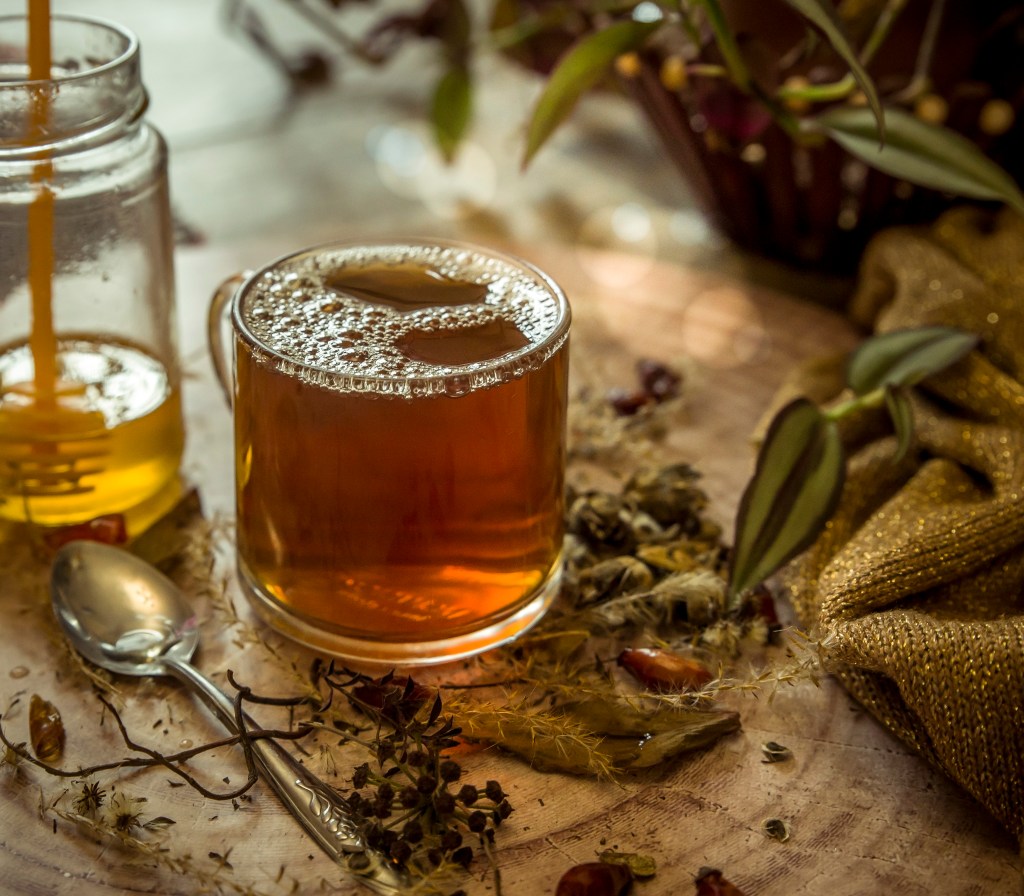
*I sometimes also just add this to a cup of tea without the Fire Cider.
🌿 A Wholiopathic Cold & Flu Season Prep Kit
When sickness strikes, the last thing you want is to scramble for supplies. By preparing a few key remedies ahead, you’ll be ready to nurture both body and spirit. Here’s a simple kit you can keep on hand:
A spicy, vinegar-based tonic to keep the immune system humming. Take a spoonful daily or at the first sign of sniffles. Find the recipe by clicking on this link.
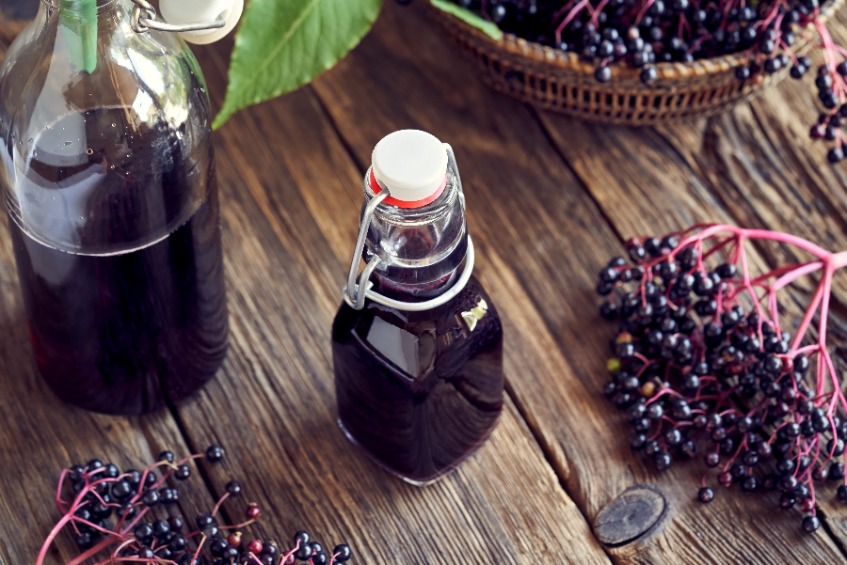
A delicious, antioxidant-rich syrup that supports immune function. Find the recipe by clicking on this link.
Throat Soothing Tea Blend
Calms scratchiness and irritation.
Per Cup:
1 tsp marshmallow root
1 tsp licorice root
1 tsp slippery elm bark
½ tsp peppermint or chamomile (optional)
Steep 10–15 minutes, covered. Sip warm.
Herbal Steam Blend
Opens sinuses and eases congestion.
Ingredients
1 Tbsp dried eucalyptus leaves
1 Tbsp dried rosemary
1 Tbsp dried peppermint
Pour boiling water over herbs in a bowl. Lean over, cover head with a towel, and breathe deeply for 5–10 minutes.
OR
* Essential Oil Blend for Herbal Steam
Add this blend to a bowl of steaming water to open airways and ease congestion.
Steam Blend Recipe (make a stock blend in a small bottle):
10 drops Eucalyptus (radiata or globulus)
8 drops Peppermint
6 drops Rosemary cineole
6 drops Tea Tree
4 drops Lavender
To use: Add 1–2 drops of the stock blend to a bowl of hot water. Cover head with a towel, lean over carefully, and inhale for 5–10 minutes.
Chest Rub (Vapor Balm)
A soothing balm for coughs and congestion.
Ingredients
½ cup coconut oil (or shea butter)
2 Tbsp beeswax pellets
10 drops eucalyptus essential oil
10 drops peppermint essential oil
6 drops rosemary essential oil
4 drops lavender essential oil
Instructions
Melt oil + beeswax in double boiler.
Stir in essential oils.
Pour into tins/jars and let cool.
Rub on chest, back, or feet.
Vitamin C + Zinc Herbal Tea
A whole-food boost for immunity.
Per Cup:
1 tsp dried rosehips
1 tsp hibiscus
½ tsp lemon balm
Juice 1/2 fresh orange or lemon
Raw honey to taste
Steep 10 minutes. Drink daily.
Bone Broth
Nourishing, hydrating, and soothing when appetite is low.
Ingredients
2–3 lbs bones (chicken or beef)
2 carrots, chopped
2 celery stalks, chopped
1 onion, quartered
2 garlic cloves
Peppercorns to taste
Pink Himalayan Sea Salt (This is totally up to you. Some don’t use it all and need low sodium options. I have POTS so I will take all the salt I can get!)
2 Tbsp apple cider vinegar
Loads of fresh herbs to your liking! I use a lot of rosemary in mine but I like to change mine up with different combinations. Sometimes it comes out more herb broth than bone broth!
Water to cover
Instructions
Place everything in a slow cooker.
Cover with water.
Cook on low 12–24 hours.
Strain and store.
Sip warm or use as soup base.
Comforts (Optional, but Healing)
A cozy environment is medicine too. Keep on hand:
Soft blankets, clean pillowcases (to make changing them out often while ill easier) and herbal heat packs
Beeswax candles
Gentle tissues like the ones with lotion or aloe added
Diffuser blend for calm: 3 drops lavender, 2 drops lemon, 1 drop frankincense
9. Good Samaritan / Thieves Blend
This classic oil blend has a rich history as a protector during times of plague, making it perfect for immune support, cleaning, and purifying.
Master Blend (make this first):
40 drops Clove
35 drops Lemon
20 drops Cinnamon bark
15 drops Eucalyptus
10 drops Rosemary
Roller Blend (Immune Support)
For a 10 ml roller:
3–5 drops Good Samaritan Master Blend
Top with carrier oil (fractionated coconut, jojoba, or almond oil)
Roll on bottoms of feet, along spine, or wrists as needed.
Cleaning Concentrate 20–30 drops Good Samaritan Master Blend
1 cup white vinegar
1 cup distilled water
Optional: 1 tbsp Castile soap
Shake before use. Store in a glass spray bottle.
🌬 Diffuser Blend 4–6 drops Good Samaritan Master Blend in diffuser water reservoir
Purifies the air, supports the immune system, and smells warm and spicy.
💛 Why Prepare Ahead?
Herbal wisdom is about more than fighting illness — it’s about living in rhythm with the seasons and caring for the body God has entrusted to you. By stocking your cold and flu kit now, you’ll be ready to care for yourself and your family with peace, not panic.
Fire cider with its swirl of Liquid Gold is more than just a remedy — it’s a reminder: I am ready. I am cared for. I am nourished.
From my Grace Filled Lemons heart to yours,
Laura
*A Gentle Word for the Immune-Compromised
If you live with a chronic illness, autoimmune disease, or are otherwise immune-compromised, please know that your health is precious. Don’t feel guilty about taking extra steps to protect yourself.
Wearing a mask in crowded places is not a weakness—it’s wisdom and self-compassion.
Resting instead of pushing through is a way of honoring the body God entrusted to you.
Saying “no” to gatherings during high germ season is not selfish—it’s stewardship.
Using herbs, oils, and natural supports can help strengthen resilience, but they don’t replace rest, nutrition, and self-care.
Your safety and peace of mind matter. If you need to do things a little differently to stay well, do so with grace. You are not less faithful or less strong for protecting your health—you are honoring both your life and the Giver of it.
You don’t need matching place settings or a perfectly clean house to offer hospitality. You don’t need a dining room that seats twelve or a freezer full of casseroles. You don’t need to be impressive.
You just need to be open.
In the Kingdom of God, hospitality is not about performance—it’s about presence. It’s about saying, “There is room for you here.” At my table. In my schedule. In my messy, imperfect, very real life.
“Contribute to the needs of the saints, and seek to show hospitality.” — Romans 12:13
Hospitality is one of the oldest Christian practices—rooted in the early Church, modeled by the saints, and wrapped in the very nature of Christ.
Jesus didn’t just preach to the crowds. He sat at tables. He lingered with people others ignored. He let interruptions become invitations.
He made space—for sinners, for the sick, for the searching. And He still does.
When we welcome others, we reflect the heart of God. Whether it’s a warm meal, a phone call, or a kind smile in the checkout line, hospitality is a form of holiness. It says, “You belong. You’re safe here. You’re seen.”
And in a world full of loneliness and striving, that kind of welcome builds the Kingdom more than we know.
A Prayer for Open Doors and Open Hearts:
Lord, make my heart a place of welcome. Teach me to slow down and notice who needs a place at the table—literal or spiritual. Give me courage to open my life, even when it feels imperfect. Let my home, my presence, and my time reflect Your generous love. Amen.
Journaling Prompts:
How do I define hospitality—and where might God be inviting me to expand that definition?
What holds me back from offering welcome to others?
Who in my life might need a place to belong right now?
What does hospitality look like in this season of my life—simple, sustainable, sacred?
Whether you set a table, offer a chair, or simply slow down to listen, You are building a doorway to grace.
Our priests and deacons carry a weight we rarely see. They rise early to prepare homilies, anoint the sick at all hours, celebrate Mass, counsel parishioners, lead ministries, and quietly intercede for us in prayer. They have given their whole lives to Christ and His Church—but they are still human, with struggles, fatigue, and temptations.
Just as they offer the sacraments and their service to strengthen us, we are called to hold them up in prayer. Scripture reminds us, “And I will give you shepherds after my own heart, who will feed you with knowledge and understanding” (Jeremiah 3:15). If God has given us these shepherds, then we should faithfully pray for their protection and holiness.
Here are a few simple yet powerful ways you can pray for your priest and deacons:
Pray for Their Holiness and Perseverance
Ask God to keep their hearts pure, faithful, and on fire for Christ. Priests and deacons are often the enemy’s targets—discouragement, temptation, and burnout can weigh heavily on them. Pray that they remain strong in their vocation, rooted in prayer, and filled with joy.
Prayer:
Lord, strengthen Father [Name] and Deacon [Name] in holiness. Guard their hearts and minds in Christ Jesus, and let their joy in serving You never fade.
Pray for Their Physical and Emotional Health
Priests and deacons often stretch themselves thin. They may spend long hours visiting the sick, juggling parish needs, and caring for others, while neglecting rest. Pray for their bodies to be renewed, for peaceful sleep, and for the emotional resilience they need to serve joyfully.
Prayer:
Father, restore Your servants with health of mind, body, and spirit. Give them rest when they are weary and strength when they are weak.
Pray for Their Preaching and Teaching
Their words at the pulpit shape our faith. Pray that the Holy Spirit inspires their homilies, and that they proclaim truth with clarity, courage, and love.
Prayer:
Holy Spirit, anoint their lips with Your Word. Let their preaching touch hearts, convert souls, and deepen our love for Christ.
Pray for Their Protection from Loneliness
Priests and deacons often give tirelessly without receiving much in return. Some battle loneliness or feelings of isolation. Pray that they are comforted by Christ’s presence and supported by a loving parish family.
Prayer:
Jesus, be their closest friend. Let them never feel alone in their service, but held in Your Sacred Heart and surrounded by the prayers of Your people.
Pray for Their Families and Loved Ones
Deacons balance family life with ministry. Priests may have aging parents or relatives who need their support. Lift up their families, asking God to grant peace, unity, and grace to those who share in their sacrifices.
Prayer:
Lord, bless the families of our priests and deacons. Surround them with Your love, and reward them for the hidden sacrifices they make.
Offer Sacrifices and Mass Intentions
Beyond words, you can offer a rosary, a day of fasting, or even have a Mass offered for their intentions. These hidden gifts are treasures that sustain them in unseen ways.
Closing Encouragement
The next time you see your priest at the altar or your deacon assisting at Mass, remember: your prayers are part of the invisible armor that strengthens them. Even a short prayer whispered during the day makes a difference.
Our shepherds lead us toward Heaven. Let’s help carry them there with our faithful intercession.
✨ Reflection Prompt for Readers:
This week, choose one specific way to pray for your priest or deacon. Write their name on a prayer card and place it in your Bible or prayer corner as a daily reminder.
Some of us are good at doing. We wake up with to-do lists in our minds and a quiet sense of pressure in our chests. We serve and sweep and organize. We give and go and keep going.
We think: If I just get one more thing done, then I can breathe.
But God didn’t design us to live in constant motion. He designed us to live in rhythm—work and rest, sowing and stillness. Even in the Garden, before the fall, before pain, before sin—there was rest.
“And on the seventh day God finished His work which He had done, and He rested…” — Genesis 2:2
Rest is not laziness. Rest is not quitting. Rest is holy. Because God Himself did it.
When we rest with trust, we declare that we are not God. We stop striving, and we let Him carry what only He can carry. We acknowledge that our value doesn’t come from our productivity but from His love.
And in doing so, we build His Kingdom in a way the world doesn’t understand.
Your rest can become an act of faith. Your stillness can be worship. Your quiet presence, your sabbath soul, your unclenched hands—all of it speaks: God is enough.
And maybe that’s the loudest Kingdom message of all.
A Prayer for Sacred Stillness:
Lord, You worked and You rested. Teach me to follow Your rhythm. Help me lay down the burdens I was never meant to carry. Remind me that You are still working, even when I stop. Let my rest become an offering. Let it become a place where I meet You. Amen.
Journaling Prompts:
What is my current relationship with rest—do I resist it, avoid it, crave it, or feel guilty for it?
What would it look like to build sacred rest into my life this week?
Where am I over-functioning out of fear, pride, or control?
How can I let go, even a little, and let God take the lead?
Take this as your gentle permission: You do not have to earn your worth. God is already pleased to dwell with you—even in stillness.