By Laura | Grace Filled Lemons
As the summer sun begins to shift ever so slightly, we herbalists and wellness seekers start preparing for the season ahead. One of my favorite traditions? Making a batch of Fire Cider. This vibrant, zesty tonic takes about four weeks to infuse—so starting now means you’ll have it ready just in time for cold and flu season.
But fire cider isn’t just for sniffles and sneezes. It can be a powerful ally for those of us navigating chronic illness—when used mindfully.
Let’s walk through what it is, how to make it, why it matters, and how to adapt it for tender systems like mine (and maybe yours too).

What is Fire Cider?
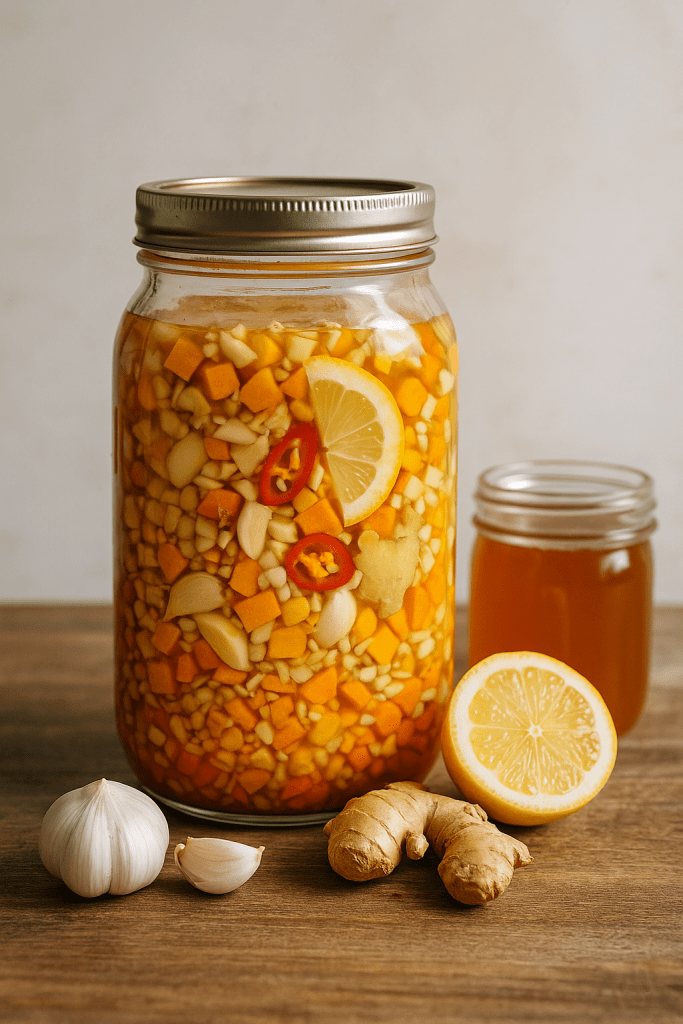
Fire cider is a traditional folk remedy—an apple cider vinegar-based infusion packed with pungent, spicy, and immune-loving herbs like garlic, ginger, horseradish, onions, hot peppers, turmeric, and citrus. Once strained, it’s often sweetened with raw honey.
The result? A warming, invigorating tonic that helps:
• Stimulate circulation
• Support digestion
• Clear congestion
• Bolster immune defense
• Provide antimicrobial, antiviral, and anti-inflammatory support
It’s a pungent powerhouse. And it’s deeply rooted in kitchen herbalism—accessible, adaptable, and made with love.

Why It’s Helpful for Chronic Illness
Fire cider doesn’t cure chronic illness—but it can gently support the body’s terrain. For many of us with autoimmune, fatigue-related, or inflammatory conditions, it offers:
• Circulatory stimulation – helpful when blood flow is sluggish or extremities get cold (hello, dysautonomia and POTS).
• Digestive support – ACV and ginger aid in digestion and motility, often sluggish in chronic illness.
• Immune modulation – garlic, onion, and turmeric can help keep immune function balanced without overstimulation.
• Lymph movement – the spicy elements promote internal warmth and flow, helping to move stagnation.
But perhaps most importantly—it connects you to the rhythm of healing. The slowness of steeping herbs in vinegar, the ritual of making something nourishing from scratch—it reminds you that your body is worth caring for.

Important Notes on Sensitivities
Many of us with chronic illness also have sensitive systems. Myself included. Here’s how to approach fire cider mindfully:
• Start small: Just a ¼ tsp in water may be plenty to test your reaction.
• Go gentle on spice: If you’re histamine-sensitive, omit or reduce hot peppers and horseradish.
• Use fresh ginger and turmeric carefully: Both are powerful and warming but may need to be limited if your system is inflamed or overstimulated.
• ACV caution: Apple cider vinegar is high in histamines and can aggravate reflux or mast cell issues. Try lemon juice instead, or use diluted ACV and sip slowly.
• Skip raw honey if allergic: Or wait to add it until serving, so you can customize each dose.
Trust your body’s wisdom. There is no “one-size-fits-all” in herbalism.

How to Make Classic Fire Cider
Ingredients
(Adjust amounts based on your jar size and tolerance)
• ½ cup chopped fresh horseradish root
• ½ cup chopped onion
• ¼ cup chopped garlic
• ¼ cup chopped fresh ginger root
• 1–2 fresh hot peppers (or omit for low histamine)
• Zest and juice of 1 lemon
• 1–2 sprigs rosemary or thyme
• 1 tbsp turmeric (fresh or powdered)
• Apple cider vinegar to fill the jar
• Raw honey (to taste, added after infusion)
Directions
1. Place all chopped ingredients in a clean quart jar.
2. Pour apple cider vinegar over everything until completely covered. Use a non-metal lid (or place parchment between lid and vinegar).
3. Shake daily and keep in a cool, dark place for 3–4 weeks.
4. Strain through cheesecloth or a fine sieve.
5. Store in the fridge and label your jar. Add honey to sweeten if desired.
To Use
Take ½–1 tablespoon daily during cold season, diluted in warm water or tea. Use more at the first sign of illness.

Final Thoughts
Preparing fire cider now is a gift to your future self. Even if you never catch a cold, you’ll have a potent, warming ally ready to awaken your system and encourage resilience.
For me, it’s not just what’s in the jar—it’s the sacred act of preparation. The way I gently chop each root and peel each clove reminds me that healing can start in my own hands. That strength doesn’t always roar—it often brews slowly.

A Simple Prayer for the Season Ahead
Lord, bless this jar and the hands that made it. May this cider carry warmth to tired bodies, clarity to clouded minds, and resilience to tender hearts. As I sip this bitter and sweet remedy, remind me that healing takes time—and that You walk with me through every season. Amen.

Calming Herbal Tea Pairing
Sip this alongside your fire cider for extra grounding support:
Nervous System Nourish Tea
• 1 part lemon balm
• 1 part chamomile
• 1 part oatstraw
• Pinch of lavender (optional)
Steep 1 heaping tsp per cup for 10–15 minutes, covered. Strain, sweeten if desired, and sip warm.

Disclaimer
This post is for educational and inspirational purposes only and does not substitute for medical advice. Please consult with your healthcare provider before starting any new herbal protocol—especially if you have chronic illness, take medication, or have known sensitivities.


Leave a Reply