• Mary magdalene, 1805 – 1949

    Honoring the Feast of St. Mary Magdalene – July 22

    Dear Weary Woman,

    If your heart feels heavy, your past feels loud, or your tears have become a quiet language you speak more fluently than joy—this letter is for you.

    There was a woman once who knew your ache.

    Her name was Mary Magdalene.

    She wasn’t defined by her shame, though others tried.

    She wasn’t dismissed by Jesus, though others did.

    She was seen. Loved. Healed.

    And not just healed—called by name. Chosen to be the first witness of the Resurrection.

    Maybe you’ve wandered far.

    Maybe you’ve been clinging on by a thread.

    Maybe you’ve been faithful but feel forgotten.

    No matter where you are, He sees you still.

    Jesus doesn’t recoil at your pain. He meets you in it.

    Like Mary, you don’t have to explain the tears. You can just bring them to Him.

    She did. And it changed everything.

    Her tears washed His feet. Your tears are welcome too.

    She stood at the foot of the Cross when others ran.

    She lingered in the garden when all seemed lost.

    She became the Apostle to the Apostles because she didn’t give up on love.

    And neither should you.


     Wholiopathic Insight: Healing through Holy Tears

    Crying isn’t weakness. It’s release. It’s regulation.

    God designed your nervous system to heal through embodied emotion—and tears are part of that.

    • When you cry, your parasympathetic system activates (your “rest and digest” mode).
    • Emotional tears release oxytocin and endorphins, which soothe pain and lower stress.
    • Suppressed emotion can manifest as physical symptoms—chronic fatigue, pain, inflammation.

    So let the tears come. Light a candle. Place your hand on your heart. Speak her name. Speak His. And breathe.

    You are not beyond healing. You are already seen.


    Ways to Honor St. Mary Magdalene on Her Feast Day (July 22)

    Here are simple ways to remember her life and invite her intercession:

    1. Read John 20:11–18 – Meditate on the moment Jesus calls her by name.
    2. Offer your tears in prayer – Journal, cry, or sit in silence with God. Bring what hurts.
    3. Light a rose-scented candle or use rose oil – Roses are a symbol of Mary Magdalene’s devotion and healing.
    4. Create a “Gratitude Garden” in her honor – Write down what you’re grateful for despite the pain.
    5. Bake honeyed bread or anoint with oil – In ancient tradition, Mary brought spices and oil to anoint Jesus. Do something with scent and sweetness to mark the sacred.
    6. Pray for the women still weeping – Those who feel forgotten, burdened, or cast aside.

    A Prayer to St. Mary Magdalene

    St. Mary Magdalene,

    You who were the first to hear Him call your name in the garden—

    Intercede for us now, we who are lost in our own.

    Teach us how to linger when hope feels gone.

    Teach us how to love Him in every season, even the weeping ones.

    May our tears become offerings.

    May our healing come through His mercy.

    Walk with every woman who feels too broken, too far, too much.

    And show her the truth:

    She is loved. She is chosen. She is known.

    Amen.

  • Some days, I write about saints. About herbs and healing. About the slow work of becoming whole.

    But none of it matters without Him.

    None of it heals unless it’s rooted in Jesus.

    He is not an accessory to our wellness.

    He is the very source of it.


     The Sacred Heart: Love That Still Bleeds for You

    The Sacred Heart isn’t just a symbol. It’s the very core of God made visible:

    A heart that burns, breaks, and blesses.

    A heart pierced, not to condemn, but to heal.

    A heart that still beats with mercy for you and me — right now.

    It’s not distant.

    It’s not theoretical.

    It’s personal.

    And maybe you’ve forgotten that in the noise. Maybe you’ve been busy surviving.

    Or maybe you’re still afraid to come too close.

    But His heart has never stopped beating for you.

    “Come to me, all you who labor and are burdened, and I will give you rest.”

    (Matthew 11:28)


    Wholiopathic Insight: The Heart Needs a Healer

    When we talk about emotional regulation, trauma recovery, or nervous system support — we’re really talking about coming back to safety and love.

    And who offers that more than the Sacred Heart of Jesus?

    Science says:

    • Connection calms the brain.
    • Safe presence regulates the body.
    • Compassion changes our chemistry.

    But Jesus said it long before:

    “Abide in me… and you will bear much fruit.” (John 15:4–5)

    “I have loved you with an everlasting love.” (Jeremiah 31:3)

    “This is my body, given for you.” (Luke 22:19)

    Your body longs for safety.

    Your soul longs for love.

    Jesus offers both.


     A Sacred Heart Practice

    Create a moment of re-connection today:

    • Visualize His heart — burning with love, encircled with thorns, yet open and radiant.
    • Place your hand over your own heart. Whisper: “Jesus, I trust in Your love.”
    • Breathe slowly and let your nervous system receive the truth: You are held. You are safe. You are loved.

    Prayer to the Sacred Heart

    Jesus, gentle and lowly of heart,

    I come with nothing but need.

    I come with pain, with fear, with longings too deep for words.

    You do not turn me away.

    Your heart still bleeds with mercy.

    Wrap me in Your flame of love.

    Let it burn away my shame and soften my sorrow.

    Teach me how to rest in You.

    Let my own heart beat in rhythm with Yours.

    Amen.


    Without Jesus, there is no healing.

    Without His Sacred Heart, there is no peace.

    Until next time, keep tending your soul like sacred soil.

    May grace fill your days, may healing find your heart, and may Jesus remain your anchor.

    From my Grace Filled Lemons heart to yours.

    Laura

  • A gentle invitation to pray the Rosary daily

    There’s a quiet truth tucked into the corners of our everyday life: what we allow into our minds and hearts takes root.

    And slowly, silently, it begins to shape who we are becoming.

    In a world of constant noise—headlines, opinions, curated images, endless scrolling—we’re often unaware of the seeds being sown in the soil of our souls. Fear. Comparison. Distraction. Doubt. All of it adding up until we feel spiritually numb, anxious, scattered, or deeply tired.

    But Scripture reminds us:

    “Above all else, guard your heart, for everything you do flows from it.” — Proverbs 4:23

    We were never meant to carry everything the world throws at us.

    We were meant to carry Christ.


    What Are We Feeding Ourselves?

    If our minds were a garden, what would we find growing there?

    We cannot expect peace to flourish when we’re watering anxiety.

    We can’t hear God’s whisper when the volume of the world is turned all the way up.

    Ask yourself:

    • What am I listening to every day?
    • What am I watching, reading, scrolling through?
    • What thoughts do I allow to linger?
    • What voices do I give the most weight to?

    These are soul-shaping questions. And the answers are invitations—not to shame, but to reorient. To prune, to weed, to plant something holier in their place.


    A Daily Anchor: The Rosary

    One of the simplest and most profound ways to tend to the soul is by praying the Rosary.

    It might seem old-fashioned at first glance. Or overwhelming. Or monotonous.

    But it’s not.

    The Rosary is not about reciting empty words—it’s about entering into the life of Christ through the heart of His mother.

    It’s about slowing down. Meditating. Holding onto something unshakeable in the middle of chaos.

    It’s about giving Mary permission to walk with us, intercede for us, and mother us gently toward Jesus.


    A Gentle Rosary Plan for Beginners

    You don’t have to pray all five decades right away.

    You don’t even have to know what you’re doing. You just have to begin.

    Here’s a simple plan to get started:

    Week 1: One decade a day

    Choose a mystery (Joyful, Sorrowful, Glorious, or Luminous) and pray one Our Father, ten Hail Marys, one Glory Be. Just one decade. That’s it.

    Week 2: Two decades a day

    Build from there. Invite a deeper meditation on the life of Jesus.

    Week 3 and beyond: Add as you’re able

    Let it become a rhythm. A habit. A refuge.

    You can listen to audio rosaries, pray while you walk, hold your beads in the quiet of night. There is no wrong way to begin. Only grace waiting to meet you.


    What to Focus on Instead

    Instead of letting the news cycle set the tone for your day, let the Rosary reset your heart.

    Instead of spiraling into worry, hold the hand of the Blessed Mother and let her walk you through the mysteries of hope.

    Instead of filling your mind with more noise, choose to dwell in the truth of Christ’s life, death, and resurrection—one bead at a time.


    A Simple Prayer to Begin

    Mary, gentle Mother,

    I invite you into my day.

    Help me to quiet the noise,

    to guard my heart,

    and to fix my eyes on Jesus.

    Walk with me through the Rosary—

    teach me to pray, to ponder, to love more deeply.

    Lead me back to Him. Amen.


    You Are the Gatekeeper

    You get to choose what enters.

    You get to tend your own garden.

    Let today be the day you say yes to peace.

    Yes to stillness.

    Yes to Mary’s hand in yours.

    Begin with one bead. One whisper. One Hail Mary.

    And watch what blooms.

    In His grace,

    Laura

  • S.S. Heart of Mary (1890), vintage religious illustration. Original public domain image from the Library of Congress.

    When I was a Protestant, Mary was a footnote.

    Honored at Christmas, mentioned in passing, admired from a distance — but never really known. Never truly loved. And certainly never turned to in suffering.

    But then came the illness.
    The limitations.
    The shame.
    The fear.
    The deep mother-wounds I didn’t know I carried — all of it surfaced when my body began to fail me and no one else seemed to understand.

    And somehow… that’s when Mary found me.

    Not with fanfare.
    Not with theology.
    But with the gentlest embrace of a mother who saw my ache — and didn’t look away.

    Mary Enters the Hidden Places

    One of the most beautiful titles of Mary is “Refuge of Sinners.” But I’ve come to know her also as:

    Refuge of the Fatigued.
    Consolation of the Chronically Ill.
    Mother of the Overlooked.

    She doesn’t stand at the gates of heaven waiting for perfection.
    She steps into sick rooms.
    She kneels beside tear-streaked pillows.
    She enters the quiet places where we feel unseen and unworthy — and she stays.

    Mary doesn’t heal us instead of Jesus. She leads us to Him.

    And when our bodies are too weak, when our spirits are too heavy, she lifts us — like any mother would — and carries us to the feet of Christ.

    She Knows Suffering

    Mary knows what it is to stand helplessly by while someone you love suffers.

    She knows the ache of unanswered questions.
    She knows what it’s like to live quietly, in obscurity, misunderstood.
    And she knows the agony of watching pain unfold — even when you said “yes” to God’s will.

    This is why she’s the perfect mother for you and me.

    Because she doesn’t need you to have the words.
    She doesn’t need you to be strong.
    She just wants you to let her in.

    A Prayer to Mary on a Hard Day

    Mother Mary,
    You who held Jesus in the stable and beneath the Cross,
    Hold me now in this suffering I do not understand.
    Be a mother to me — not in theory, but in presence.
    Come into this room, into this pain, into this place I can’t fix.
    Whisper the words I cannot pray.
    Rock me in your mantle of grace.
    Lead me gently to your Son.
    Amen.

    Dear friend, if you’ve never truly known Mary — or if you’ve been afraid to trust her — start here.

    Ask her to show you she’s real.
    Ask her to be a mother to you in your weakness.
    You don’t have to earn her love.
    You already have it.

    And no matter how sour your season may be — grace is still being poured.

    With love,
    Laura

  • By Laura

    Marriage is one of the most sacred and beautiful gifts God has given us. But it’s also one of the most vulnerable. Life will stretch, shake, and sometimes shatter the things we thought were secure. Feelings fade. Seasons change. Storms will come. And when they do, we learn that the strength of our marriage was never meant to come from just the two of us—but from the One who binds us together.

    Ecclesiastes 4:12 says,

    “Though one may be overpowered, two can defend themselves. A cord of three strands is not quickly broken.”

    That third strand—Christ—isn’t decorative. He is essential. He is the anchor when emotions are fragile, when grief knocks on our door, when misunderstandings arise and forgiveness feels hard. When He is not at the center, we are left trying to hold it all together with human strength. And that was never enough to begin with.

    I’ve learned—sometimes through tears, sometimes through grace-filled breakthroughs—that a Christ-centered marriage doesn’t mean perfection. It means perseverance. It means daily surrender. It means praying not, “Lord, fix my spouse,” but “Lord, make me more like You.” It means leaning into grace when we fail each other, and choosing love when it’s inconvenient or costly.

    In a world that often treats marriage as temporary or transactional, we must remember: marriage is a covenant, not a contract. It’s not based on performance or circumstances. It’s built on sacrificial love—the kind Christ showed us on the cross.

    When Jesus is truly the center:

    • We forgive quicker because we know how much we’ve been forgiven.
    • We love deeper because we’re drawing from a Source that never runs dry.
    • We stay grounded because our identity isn’t in our roles as husband or wife—but as beloved sons and daughters of God.

    If you’re married, I encourage you to ask yourselves today:

    Are we building on the Rock or the sand?

    Are we inviting Christ into our conversations, our conflicts, our dreams, our disappointments?

    Marriage without Christ may survive a season, but it cannot thrive in the long haul. With Him, even the most fractured relationships can be restored. Even the dry places can bloom again.

    Let’s be a generation that doesn’t just stay married—but stays surrendered. Let’s let the world see what happens when Christ holds the pen to our love story.

    Prayer for a Christ-Centered Marriage

    Lord Jesus,

    Be the center of our hearts and the cornerstone of our marriage.

    Teach us to love each other with Your patience, Your kindness, and Your truth.

    In moments of hurt, be our healer. In moments of joy, be our praise.

    Help us forgive quickly, listen deeply, and always come back to You.

    Let our marriage be a reflection of Your covenant love—faithful, enduring, and full of grace.

    Amen.

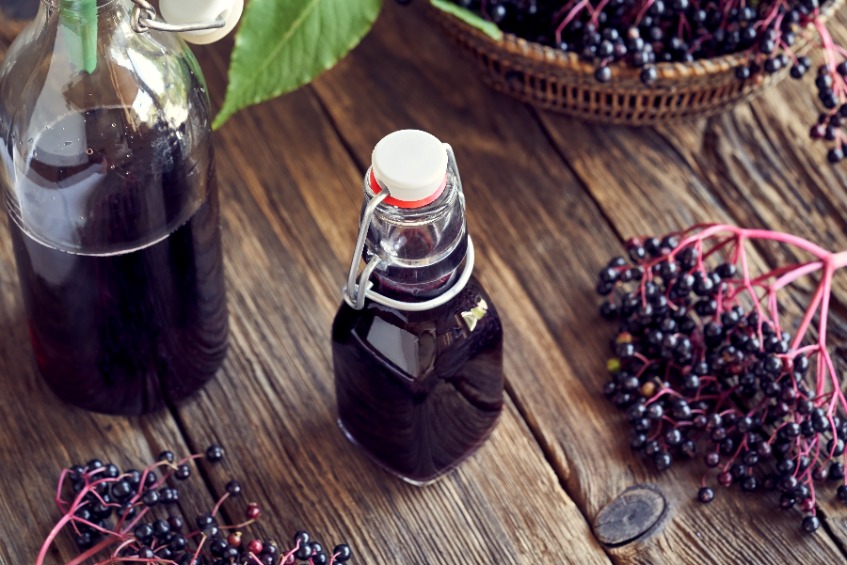
  • A bottle of black elder syrup with fresh elderberries – a natural herbal remedy

    As I prepare and dream of the air turning crisp and the light shifting toward autumn, I find myself drawn once again to the sacred rhythm of preparing my favorite deep purple tonic.. elderberry syrup. There’s something deeply grounding about this process—gathering simple ingredients, simmering them low and slow, and blessing the final jar with prayer. In a world that rushes, this act invites us to slow down, give thanks, and partner with God’s created goodness.

    Whether you’re preparing for cold and flu season, looking for gentle support for chronic illness, or simply seeking a more natural rhythm of wellness, elderberry syrup is a beautiful companion. Below, you’ll find everything you need to know to make your own—plus a prayer to pray over the finished syrup as you offer it to your family with love.

     Why Elderberry?

    Elderberries (Sambucus nigra) have long been treasured in folk and traditional medicine for their ability to support the immune system. Rich in vitamin C, antioxidants, and flavonoids, they’ve been studied for their potential to reduce the severity and duration of colds and flu.

    Elderberry may help:

    • Ease symptoms of upper respiratory infections
    • Reduce inflammation
    • Fight off viral replication
    • Support the immune system during times of stress or illness

    Elderberry syrup is especially beloved by mothers, caregivers, and herbalists for its gentleness and effectiveness—especially in children, the elderly, and those seeking alternatives to over-the-counter medications.

    How to Make Elderberry Syrup

    Making elderberry syrup is simple, calming, and fills your home with the warm, spicy scent of healing.

    Ingredients:

    • 1 cup dried elderberries (or 2 cups fresh or frozen)
    • 4 cups filtered water
    • 1–2 cinnamon sticks
    • 1 tablespoon dried ginger root (or a few fresh slices)
    • 4–6 whole cloves
    • ½ teaspoon dried orange peel (optional)
    • 1 cup raw honey (or to taste)

    Why These Herbs?

    Each supporting ingredient in this syrup is intentionally chosen—not only for flavor but for its God-given healing properties:

    Cinnamon

    Cinnamon is naturally antimicrobial and antiviral. It helps the body fight off infections and warms the system, improving circulation. It also helps regulate blood sugar levels—especially helpful during illness or stress when our body’s energy systems are taxed.

    Ginger

    Ginger is a powerful anti-inflammatory that soothes the throat, eases nausea, supports digestion, and promotes sweating (which can help break a fever). It also boosts circulation and immunity—helping your body move illness out more efficiently.

    Cloves

    Cloves are rich in antioxidants and known for their pain-relieving, antiviral, and antiseptic qualities. They’re especially helpful for respiratory symptoms like cough and congestion, and they pair beautifully with elderberry to amplify its immune-supportive effects.

    Isn’t it incredible how God has tucked healing into the warmth of a spice?

    Instructions:

    1. In a medium saucepan, combine elderberries, herbs, and water.
    2. Bring to a gentle boil, then reduce heat and simmer for 30–45 minutes, or until the liquid is reduced by about half.
    3. Remove from heat and let cool slightly.
    4. Mash the berries with the back of a spoon to release any remaining juice.
    5. Strain through a fine mesh strainer or cheesecloth into a glass bowl or measuring cup.
    6. Once fully cooled, stir in the raw honey. (Do not add honey while hot—it destroys the raw enzymes.)
    7. Pour into a clean glass jar. Store in the refrigerator for up to 2 months.

    Optional: Label your jar with a blessing or Scripture verse to remind you of the sacredness of God’s healing gifts.

    How to Use Elderberry Syrup

    • For daily immune support: Adults take 1 teaspoon per day; children take ½ teaspoon.
    • At the onset of illness: Adults may take 1 teaspoon every 3–4 hours; children can take ½ teaspoon every few hours.
    • Other ideas: Stir it into herbal tea, blend into a smoothie, drizzle over warm oats or pancakes, or take directly from a spoon with prayer and gratitude.

    Cautions & Considerations

    Elderberry is a beautiful plant, but it’s important to use it safely and with wisdom:

    • Never consume raw elderberries — they must be cooked, as raw berries contain compounds that can cause nausea and digestive upset.
    • Avoid in autoimmune conditions unless advised by a practitioner—elderberry may stimulate immune activity.
    • Do not give honey to children under one year old.
    • If you’re pregnant, nursing, or on medication, consult a knowledgeable herbalist or holistic doctor before use.

    A Prayer to Bless Your Syrup

    Heavenly Father,

    You are the Maker of every healing leaf and every nourishing fruit.

    Thank You for the gift of elderberry and the ancient wisdom tucked within it.

    As I prepare and pour this syrup, I ask You to bless it—

    May it bring comfort to our bodies, calm to our hearts, and hope to our days.

    Use this humble remedy as a vessel of Your mercy.

    And may those who receive it feel not only restored—but deeply loved.

    In Jesus’ name, Amen.

     A Final Note

    This isn’t just syrup—it’s a sacred offering. A spoonful of elderberry becomes an act of love. A prayer for protection. A gesture of care in the small, quiet corners of everyday life. That’s the beauty of holistic healing—it brings the whole person into view: body, mind, and spirit.

    So as you steep your herbs and stir your honey, remember: God is near. Even here. Especially here.

    With warmth and wellness,

    Laura

    ✨ If you try this recipe or pray over your syrup, I’d love to hear from you in the comments. What sacred kitchen rhythms do you return to each season?

  •  Traveling with chronic illness isn’t easy—but it is possible. With a little extra planning and a lot of grace, it’s possible to go beyond just surviving a trip and actually find moments of joy, connection, and beauty along the way.

    Whether you’re headed out on a road trip, catching a flight, or simply planning a weekend getaway, here are some of my favorite tried-and-true tips to help you feel as well and supported as possible.

     Pack for Your Real Life

    When you live with chronic illness, your packing list looks a little different—and that’s okay. Think of it not as extra baggage, but as loving preparation for the body you’re in.

    Here are some of my travel essentials:
    • Hand sanitizer and sanitizing wipes – Protect yourself from germs, especially in high-traffic areas like airports or gas stations.
    • Eye mask and ear plugs – Sleep is medicine. These simple tools can help you rest in unfamiliar environments. They can also help in moments of over-stimulation.
    • Mask – Especially helpful in crowded places, if you’re sensitive to fragrances or smells, or if you’re immune-compromised.
    • Portable fan or cooling towel – Crucial for those who struggle with heat intolerance or dysautonomia.
    • Electrolyte packets – Easy to slip into your bag and mix with water when you need hydration and support.
    • Essential oils – I like to bring a calming roller blend (lavender, frankincense, chamomile) and a digestive blend (peppermint, ginger, fennel).
    • Counting spoons – Not the measuring kind—the pacing kind. Remind yourself: you only have so many “spoons” a day. Use them wisely.
    • Medications + backups – Always bring a few extra days’ worth just in case. Keep them in your carry-on.
    • Doctor’s note or medical letter – Especially if you’re flying or using medical devices, having documentation can smooth things out.

     Food Tips for Traveling Well

    Navigating food sensitivities, inflammation, or special diets while traveling can feel overwhelming. A little forethought can save you from major discomfort down the line.

    Here’s how I make food more manageable while traveling:
    • Pack simple, safe snacks – Think low-histamine, anti-inflammatory, gallbladder-friendly, and satisfying:
    • Rice cakes with sunflower seed or almond butter pouches
    • Dried fruit-like pear or mango (I’m also really enjoying Solely fruit gummies)
    • Low-fat granola (I make my own at home and pack to travel)
    • GoMacro MacroBar Minis
    • Herbal tea bags
    • Single-serve dairy-free yogurt (My favorite right now are Icelandic Provisions Skyr Oat Yogurts)
    • Coconut water or boxed bone broth for sipping (if tolerated)
    • Stay somewhere with a kitchen or microwave, if possible – Even just being able to heat soup or boil water can help.
    • Research restaurants ahead of time – Use apps or menus online to find allergy-friendly spots.
    • Bring a cooler or insulated lunch bag – You’ll have more freedom to bring your own nourishing meals or snacks.
    • Hydrate often – Especially if you’re flying or prone to dizziness. Electrolytes help your body absorb water better. My favorite electrolytes come from The Absorption Co. I use the Restore every morning and the Calm every night.

     Savor, Slow Down, Say Yes to Rest

    Travel with chronic illness requires honesty—with your body, your needs, and your expectations. You might not keep the same pace as others—and that’s okay. You don’t have to do everything to enjoy something.

    Here are some gentle reminders:
    • Give yourself permission to rest. Schedule downtime into your itinerary.
    • Prioritize experiences over activities. A quiet walk by the water might be more meaningful than a jam-packed day.
    • Let others support you. Whether it’s carrying your bag or choosing a slower-paced outing, allow yourself to receive help.
    • Capture the beauty. Take photos, write a journal entry, or simply pause and soak in the moment. You are living this.

     Final Thoughts for the Road

    I used to believe travel wasn’t for people like me—people with chronic fatigue, pain, food sensitivities, or autonomic dysfunction. But over time, I learned that it’s not about traveling like everyone else. It’s about finding your way to move through the world with courage and care.

    And when I let go of the pressure to be perfect or “normal,” I found something sweeter:
    Joy in the quiet moments.
    Peace in the pauses.
    Wonder in the smallest things.

    May your next trip—whether near or far—be filled with tenderness, nourishment, and grace.

     Bonus: My Favorite Travel Tea Blend

    Here’s a calming tea blend I like to pack when I travel (either pre-mixed or in sachets):
    • 1 part chamomile
    • 1 part lemon balm
    • 1 part ginger root
    • A pinch of fennel seed

    Add a slice of fresh pear or a drizzle of raw honey if you’re able. Sip slowly. Breathe deeply. Rest when you need. You are worthy of joy—even on the road.

    Joyfully His,

    Laura

  • There’s a kind of joy the world offers—loud, fleeting, and dependent on circumstances. Then there’s another kind. Quieter. Deeper. Holy. The kind that lingers when the party’s over, when the diagnosis comes, when the light dims. I used to chase the first kind, hoping it would satisfy. But it never did.

    It wasn’t until I started encountering holy joy—the kind that flows from the heart of God—that I understood the difference.

    Worldly Joy: The Sugar Rush

    Worldly joy is everywhere. It’s the feeling we get when we buy something new, hear our name praised, or momentarily escape the hard parts of life. It’s not inherently wrong—God made us to feel pleasure and delight—but worldly joy depends on something external. It’s conditional.

    We often feel pressured to stay “happy” according to the world’s definition:
    • Be successful.
    • Stay entertained.
    • Avoid suffering.
    • Keep up appearances.

    But this kind of joy has a shelf life. It fades as quickly as it came, and we’re left chasing the next fix. It’s a sugar rush for the soul.

    Holy Joy: The Anchor

    Holy joy is different. It’s not rooted in how things look or feel—it’s rooted in Who God is.

    It’s the peace that slips into the room during prayer, even when nothing in your life has changed.
    It’s the presence you feel in Adoration or in the beauty of creation.
    It’s the deep knowing that you are held, even in sorrow.
    It’s the kind of joy the saints had—sometimes through tears.

    Holy joy is:
    • Steady.
    • Humble.
    • Quiet.
    • Radiant, not flashy.
    • Often misunderstood by the world.

    It doesn’t ignore suffering—it transforms it. It doesn’t bypass the cross—it flows through it.

    The Joy of the Saints

    Look at the lives of the saints. Many were poor, persecuted, imprisoned, or chronically ill. And yet they radiated joy. Not because life was easy—but because they had made their home in Christ.

    St. Teresa of Ávila said, “God alone suffices.”
    St. Thérèse of Lisieux said, “Joy is not found in the things which surround us, but lives only in the soul.”

    These women knew a joy that didn’t come from success or comfort—it came from union.

    How to Cultivate Holy Joy

    Holy joy isn’t something we can fake or force. But we can cultivate it by:
    • Spending time in quiet prayer (especially before the Eucharist)
    • Reading Scripture slowly and reflectively
    • Detaching from what the world tells us we need to be happy
    • Practicing gratitude in all circumstances
    • Letting God love us in our weakness, not just our strength

    When we draw close to Christ—especially through the sacraments—joy begins to rise up from the inside. Not because everything is perfect, but because He is present.

    Reflection

    If you’re longing for more than the next high or fleeting distraction—if the world’s version of joy has left you tired—come and sit at His feet. Let His joy become your strength. It won’t shout. It will whisper. And it will remain.

    “Incense of Joy” Diffuser Blend

    A sacred-scented blend inspired by the quiet joy found in the presence of God.

    “Incense of Joy” Diffuser Blend
    • 2 drops Frankincense – for grounding, spiritual clarity, and ancient sacred aroma
    • 2 drops Cedarwood – for deep calm and rootedness in God’s presence
    • 1 drop Myrrh – to evoke reverence, stillness, and holy mystery
    • 1 drop Sweet Orange – to gently lift the heart and symbolize radiant joy
    • Optional: 1 drop Patchouli or Vetiver – for an earthy, incense-like depth

    Directions:
    Add oils to your diffuser with clean water. Light a candle or sit quietly in prayer as the scent surrounds you. Let it remind you of the tabernacle, of incense rising like prayer, and of the joy that only God can give.

    Closing Prayer

    Jesus, I’ve chased joy that doesn’t last. Fill me instead with what is eternal. Teach me to delight in You—especially when life feels heavy. Anchor me in the joy that flows from Your heart. Let my life quietly shine with the light of Your presence. Amen.

    In His Love,

    Laura

  • By Laura | Grace Filled Lemons

    As the summer sun begins to shift ever so slightly, we herbalists and wellness seekers start preparing for the season ahead. One of my favorite traditions? Making a batch of Fire Cider. This vibrant, zesty tonic takes about four weeks to infuse—so starting now means you’ll have it ready just in time for cold and flu season.

    But fire cider isn’t just for sniffles and sneezes. It can be a powerful ally for those of us navigating chronic illness—when used mindfully.

    Let’s walk through what it is, how to make it, why it matters, and how to adapt it for tender systems like mine (and maybe yours too).

     What is Fire Cider?

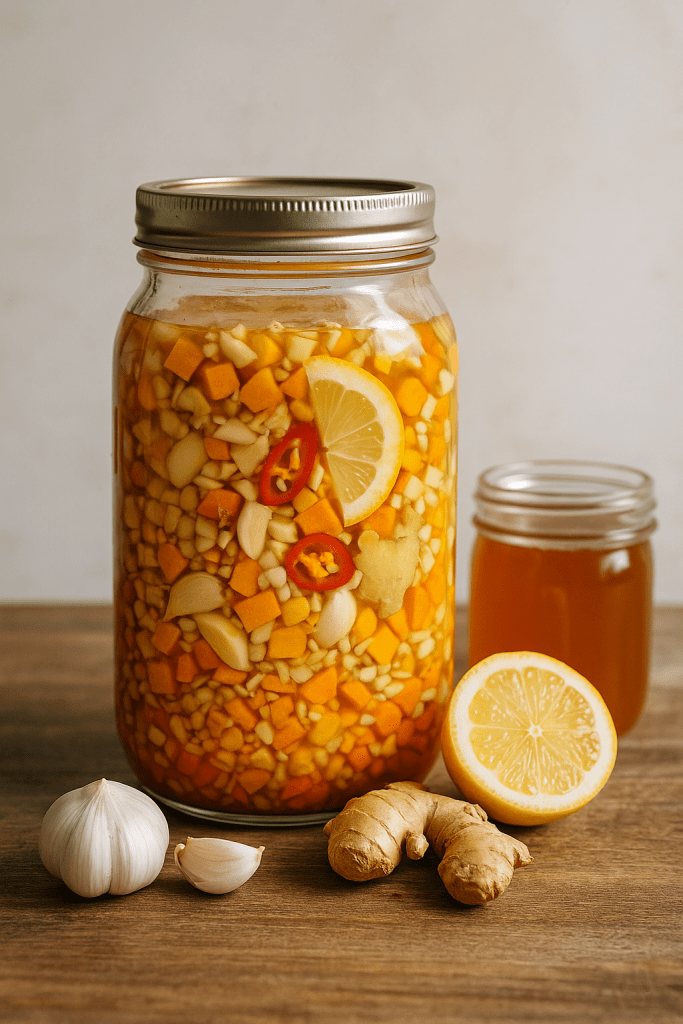
    Fire cider is a traditional folk remedy—an apple cider vinegar-based infusion packed with pungent, spicy, and immune-loving herbs like garlic, ginger, horseradish, onions, hot peppers, turmeric, and citrus. Once strained, it’s often sweetened with raw honey.

    The result? A warming, invigorating tonic that helps:
    • Stimulate circulation
    • Support digestion
    • Clear congestion
    • Bolster immune defense
    • Provide antimicrobial, antiviral, and anti-inflammatory support

    It’s a pungent powerhouse. And it’s deeply rooted in kitchen herbalism—accessible, adaptable, and made with love.

    ✨

     Why It’s Helpful for Chronic Illness

    Fire cider doesn’t cure chronic illness—but it can gently support the body’s terrain. For many of us with autoimmune, fatigue-related, or inflammatory conditions, it offers:
    • Circulatory stimulation – helpful when blood flow is sluggish or extremities get cold (hello, dysautonomia and POTS).
    • Digestive support – ACV and ginger aid in digestion and motility, often sluggish in chronic illness.
    • Immune modulation – garlic, onion, and turmeric can help keep immune function balanced without overstimulation.
    • Lymph movement – the spicy elements promote internal warmth and flow, helping to move stagnation.

    But perhaps most importantly—it connects you to the rhythm of healing. The slowness of steeping herbs in vinegar, the ritual of making something nourishing from scratch—it reminds you that your body is worth caring for.

    ⚠️

     Important Notes on Sensitivities

    Many of us with chronic illness also have sensitive systems. Myself included. Here’s how to approach fire cider mindfully:
    • Start small: Just a ¼ tsp in water may be plenty to test your reaction.
    • Go gentle on spice: If you’re histamine-sensitive, omit or reduce hot peppers and horseradish.
    • Use fresh ginger and turmeric carefully: Both are powerful and warming but may need to be limited if your system is inflamed or overstimulated.
    • ACV caution: Apple cider vinegar is high in histamines and can aggravate reflux or mast cell issues. Try lemon juice instead, or use diluted ACV and sip slowly.
    • Skip raw honey if allergic: Or wait to add it until serving, so you can customize each dose.

    Trust your body’s wisdom. There is no “one-size-fits-all” in herbalism.

    🍯

     How to Make Classic Fire Cider

    Ingredients
    (Adjust amounts based on your jar size and tolerance)
    • ½ cup chopped fresh horseradish root
    • ½ cup chopped onion
    • ¼ cup chopped garlic
    • ¼ cup chopped fresh ginger root
    • 1–2 fresh hot peppers (or omit for low histamine)
    • Zest and juice of 1 lemon
    • 1–2 sprigs rosemary or thyme
    • 1 tbsp turmeric (fresh or powdered)
    • Apple cider vinegar to fill the jar
    • Raw honey (to taste, added after infusion)

    Directions
    1. Place all chopped ingredients in a clean quart jar.
    2. Pour apple cider vinegar over everything until completely covered. Use a non-metal lid (or place parchment between lid and vinegar).
    3. Shake daily and keep in a cool, dark place for 3–4 weeks.
    4. Strain through cheesecloth or a fine sieve.
    5. Store in the fridge and label your jar. Add honey to sweeten if desired.

    To Use
    Take ½–1 tablespoon daily during cold season, diluted in warm water or tea. Use more at the first sign of illness.

    💛

     Final Thoughts

    Preparing fire cider now is a gift to your future self. Even if you never catch a cold, you’ll have a potent, warming ally ready to awaken your system and encourage resilience.

    For me, it’s not just what’s in the jar—it’s the sacred act of preparation. The way I gently chop each root and peel each clove reminds me that healing can start in my own hands. That strength doesn’t always roar—it often brews slowly.

    🙏

     A Simple Prayer for the Season Ahead

    Lord, bless this jar and the hands that made it. May this cider carry warmth to tired bodies, clarity to clouded minds, and resilience to tender hearts. As I sip this bitter and sweet remedy, remind me that healing takes time—and that You walk with me through every season. Amen.

    🍵

     Calming Herbal Tea Pairing

    Sip this alongside your fire cider for extra grounding support:

    Nervous System Nourish Tea
    • 1 part lemon balm
    • 1 part chamomile
    • 1 part oatstraw
    • Pinch of lavender (optional)

    Steep 1 heaping tsp per cup for 10–15 minutes, covered. Strain, sweeten if desired, and sip warm.

    📝

     Disclaimer
    This post is for educational and inspirational purposes only and does not substitute for medical advice. Please consult with your healthcare provider before starting any new herbal protocol—especially if you have chronic illness, take medication, or have known sensitivities.

  •  Welcome to Grace Filled Lemons!

    I never meant to start a blog.

    Not in the traditional sense, anyway. I didn’t sit down one day with a business plan and a vision board and a cup of bulletproof coffee. I sat down because I was tired. Because my body ached and my spirit was frayed and I needed a quiet place to rest—somewhere soft to land where both faith and fatigue were welcome.

    This space—Grace Filled Lemons—was born from that ache. From years of chronic illness, spiritual wrestling, slow healing, herbal learning, and holy remembering. From seasons where I lost my voice, and others where I slowly began to find it again.

    My name is Laura. I’m a wholiopathic wellness counselor, an herbalist, a writer, and a woman who is still learning how to live in a body that doesn’t always cooperate. I’ve known the sting of unanswered prayers, the confusion of diagnoses, the grief of limitations. But I’ve also known the deep comfort of chamomile in the evening, of Scripture whispered into the silence, and of discovering that God does not waste suffering—He weaves it.

    Here at Grace Filled Lemons, I want to offer you a space that is both grounded and grace-filled. A place where you can breathe. Where your journey toward healing—body, mind, and soul—is honored and held. I’ll be sharing herbal remedies, aromatherapy rituals, reflections on faith, and gentle invitations to care for yourself with intention and compassion.

    And above all: I’ll offer hope.
    Not the fluffy, plastic kind. But the rooted, aching, stubborn kind—the kind that blooms even when the soil is dry.

    A Reflection:

    There’s a Japanese practice called kintsugi—the art of repairing broken pottery with powdered gold. The cracks are not hidden; they’re filled with beauty. The brokenness becomes part of the story.

    Sometimes, I think God does that with us.

    He doesn’t erase the scars. He fills them with grace.

    He meets us in the waiting room. In the middle of a flare. In the breathless moment between heartbeats. He meets us when we don’t think we’re strong enough to keep going—and stays until we remember we don’t have to do it alone.

    So, friend—whether you’re reading this from your bed, your garden, or your kitchen floor—please know: you are not alone. Your healing matters. Your hope matters. You matter.

    You are welcome here.

    🌿

     Herbal Support: Calming Nervous System Tea

    This gentle tea blend helps support the nervous system during times of stress, overwhelm, or anxiety. Perfect for bedtime or anytime you need a reset.

    Ingredients:
    • 1 tsp dried chamomile
    • 1 tsp dried lemon balm
    • 1/2 tsp oatstraw
    • 1/2 tsp passionflower
    • Optional: a few lavender buds (very small amount)

    Instructions:
    1. Combine herbs in a tea infuser or muslin bag.
    2. Pour 8–10 oz of just-boiled water over the herbs.
    3. Cover and steep for 7–10 minutes.
    4. Strain and sip slowly. Add a touch of honey if tolerated.

    Note: Always check for any personal sensitivities or contraindications before using herbs, especially if you’re taking medication or managing chronic conditions.

    🙏

     A Prayer for the Weary Soul

    God of tender mercy,
    When my body is tired and my hope is thin,
    When the road feels long and my faith feels quiet,
    Draw near.
    Wrap me in peace that surpasses understanding.
    Steady my breath.
    Fill the cracks with gold.
    Teach me to rest—not in the absence of struggle,
    But in the presence of Your love.
    Remind me that healing is holy,
    Even when it’s slow.
    Let grace be enough for today.
    Amen.

    Until next time…

    Thank you for being here.
    Whether you’re just beginning your healing journey or have been walking it for years, I hope you find something here that feels like early spring sunlight—soft, warm, and gently faithful.

    May you meet grace in unexpected places,
    even in the lemons.

    With love and herbs,
    Laura

    Disclaimer:
    The information shared on Grace Filled Lemons is for educational and informational purposes only and is not intended to diagnose, treat, cure, or prevent any disease. The content reflects personal experience, traditional herbal knowledge, and holistic wellness insights, but it should not be considered medical advice. Always consult your licensed healthcare provider before making any changes to your health routine, especially if you are pregnant, nursing, taking medications, or living with a medical condition.

© 2025 Laura Smith. All rights reserved.
The content on Grace Filled Lemons is the intellectual property of the author and may not be reproduced without written permission.