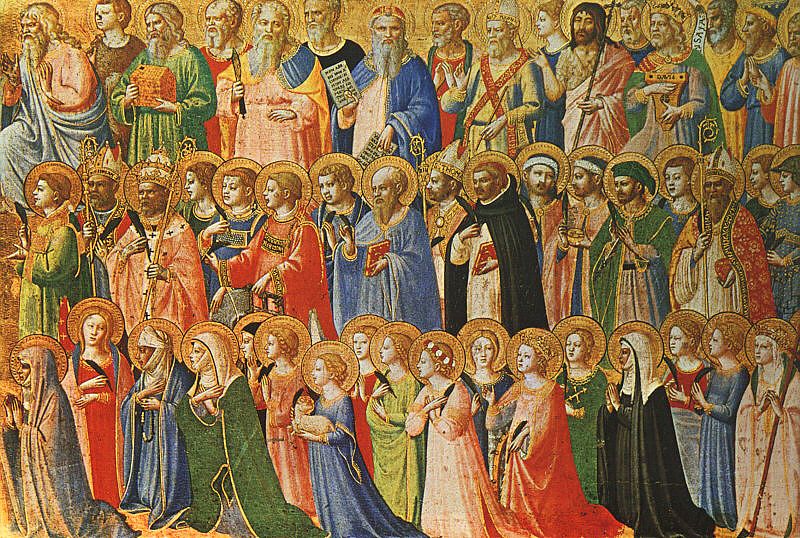
All Saints’ Day, celebrated on November 1st, is one of the Church’s oldest and most profound feasts. It honors all the saints — both known and unknown — who have gone before us and now share in God’s glory.
Historical Background
- The feast likely began in the 4th century in the Eastern Church as a day to commemorate martyrs — Christians who gave their lives for their faith.
- By the 7th century, Pope Boniface IV dedicated the Pantheon in Rome to Mary and all the martyrs, establishing the practice of celebrating all saints collectively.
- Pope Gregory III (8th century) officially fixed November 1st as the feast in the Western Church, later confirmed by Pope Gregory IV in the 9th century.
- Over time, the celebration grew to include all saints, not only martyrs, emphasizing the universal call to holiness.
The Meaning Today
All Saints’ Day reminds us that:
- Every life matters: Holiness is not only for canonized saints; it’s the goal for all Christians.
- We are part of the communion of saints: Those in heaven intercede for us, and we are united across time and space in God’s love.
- Our ordinary lives can become extraordinary: Acts of love, patience, and faithfulness can be offered to God and become eternal.
“Therefore, since we are surrounded by so great a cloud of witnesses, let us also lay aside every weight, and sin which clings so closely, and let us run with endurance the race that is set before us.” (Hebrews 12:1)
For Families and Converts
If you or your children are new to Catholicism, All Saints’ Day can feel unfamiliar. Here’s how to introduce it with joy and simplicity:
- Story Time: Read short biographies of saints at breakfast or dinner. Focus on virtues like courage, kindness, and faith.
- Crafts and Decorations: Make a “saint altar” with candles, small statues, or drawings of your favorite saints.
- Prayer Together: Light a candle and offer prayers for the intercession of saints who inspire you.
- Acts of Love: Make a small family act of service — bake for a neighbor, donate food, or help someone in need.
Even small daily actions help children (and adults!) understand that holiness is attainable in everyday life.
A Tea or Essential Oil Blend to Honor All Saints
Saints’ Harmony Herbal Tea:
- 1 tsp dried hibiscus (joy & celebration-rich red color like the fire of love)
- 1 tsp dried peppermint (clarity & refreshment)
- 1 tsp dried calendula petals (healing & holiness)
- Optional: a touch of honey for sweetness and a small pinch of cinnamon for warmth
Steep in hot water for 5–7 minutes, sip slowly, and reflect on the virtues of the saints.
Essential Oil Blend: (for diffusing or inhalation)
- 2 drops frankincense (sacred presence)
- 2 drops lavender (peace)
- 1 drop sweet orange (joy & celebration)
- Blend in a diffuser or a carrier oil for personal anointing.
Healthy, Family-Friendly Meal
“Harvest Saints Dinner” — simple, nourishing, and symbolic:
- Roasted autumn vegetables seasoned with rosemary
- Whole-grain pilaf
- Apple slices or baked apples with cinnamon (represents the sweetness of virtue)
- Optional: sparkling water with fresh herbs for a celebratory drink
This meal honors the harvest season, celebrates creation, and encourages mindful gratitude — connecting body, mind, and spirit.
Celebrating Holiness in Everyday Life
- Light a candle in honor of a favorite saint or a loved one who has passed.
- Share stories about saints’ courage, generosity, and love.
- Pray for the intercession of saints who inspire you in your daily life.
- Incorporate a family activity like baking, tea time, or crafts “in honor of the saints.”
All Saints’ Day is more than history — it’s a living invitation to join the great cloud of witnesses, to live faithfully, and to recognize the holiness God calls forth in each of us.
From my Grace Filled Lemons heart to yours,
Laura
 Grace Filled Lemons
Leave a comment